




Guitar Action Adjustment
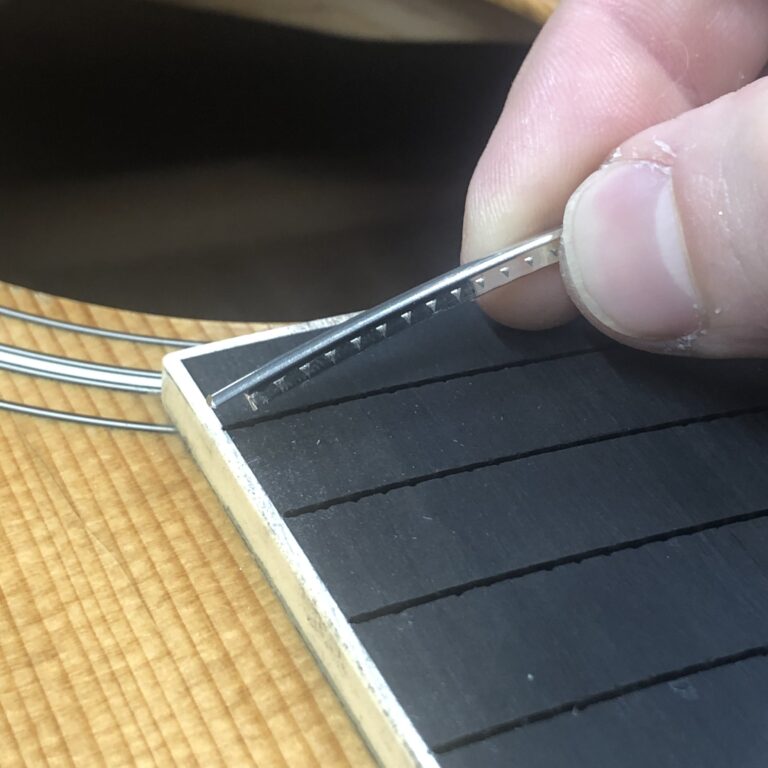
The guitars “action” refers to the height of the strings in relation to the top of the frets. The action being either “too high” or “too low” are among the more common complaints that bring clients into the guitar shop. If the action is too high, strings far away from the fretboard, the guitar can be difficult to play and may not intonate properly. If the action is too low, strings very close to the frets, the guitar may have an audible chattering or a muted buzz in certain positions as the strings vibrate against the frets.
Depending on personal taste, guitarists strive to have their playing action fall somewhere in-between those two extremes. The “sweet spot” is as varied as the instrument and its owner.
How To Test A Guitar Before Buying
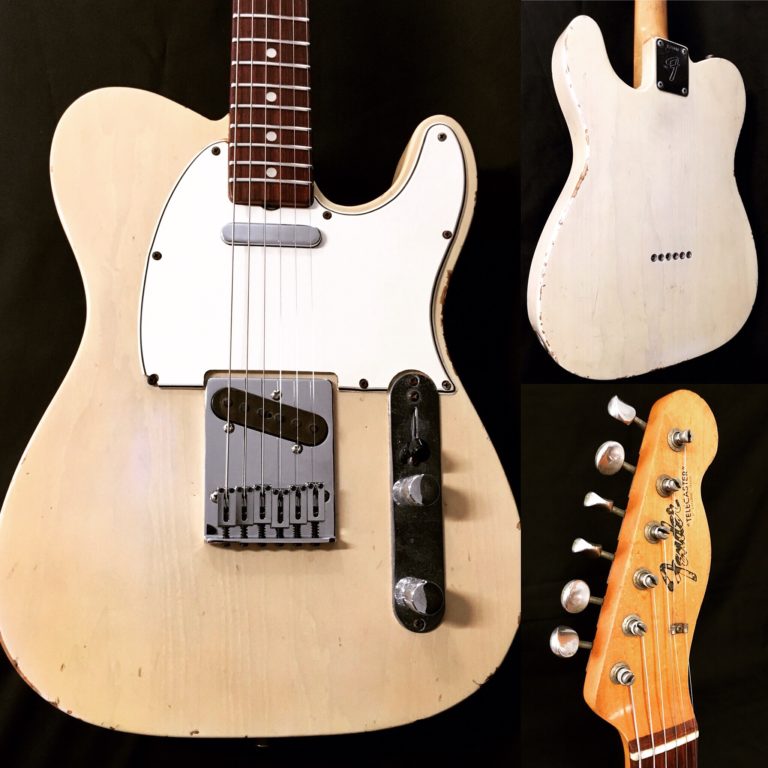
There are many things to consider when shopping for a guitar or bass. It is easy to get blinded by excitement and overlook problems that might be right in front of your eyes!
After finding what is hopefully the model you want, in the right color, at a price you can afford, you will next want to be certain the guitar is healthy. The following checklist contains the types of things that we look for during an instrument evaluation.
Fret Work: Level Crown and Polish
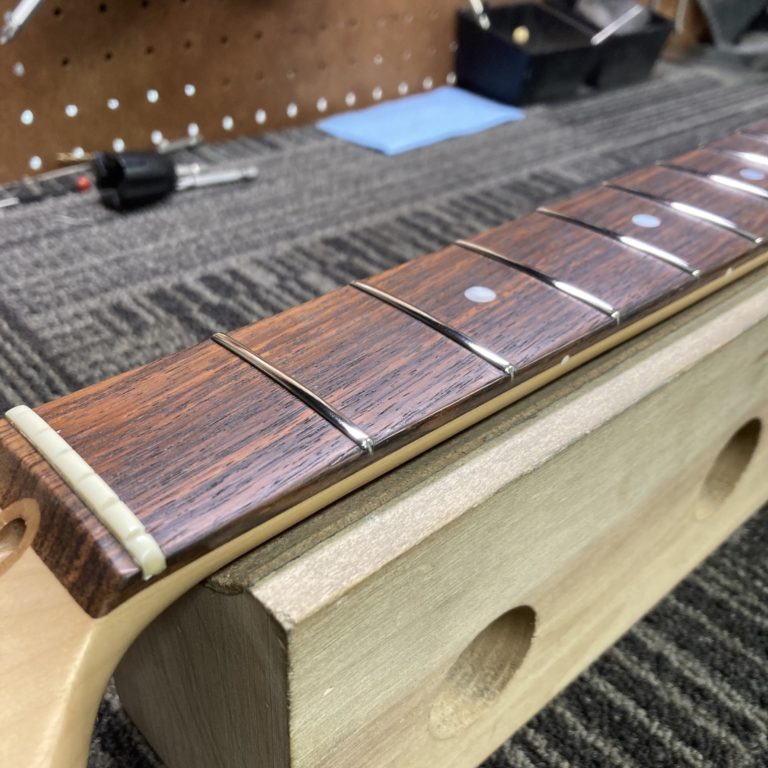
Before a setup can be performed on a guitar or bass, it is crucial that the instrument’s fretwork be in good shape; The frets should be level relative to one another, with a nice rounded profile and smooth playing surface. This is especially important for players that are sensitive to string buzzes, have a discerning ear for intonation, or that prefer the string action to be set very low.
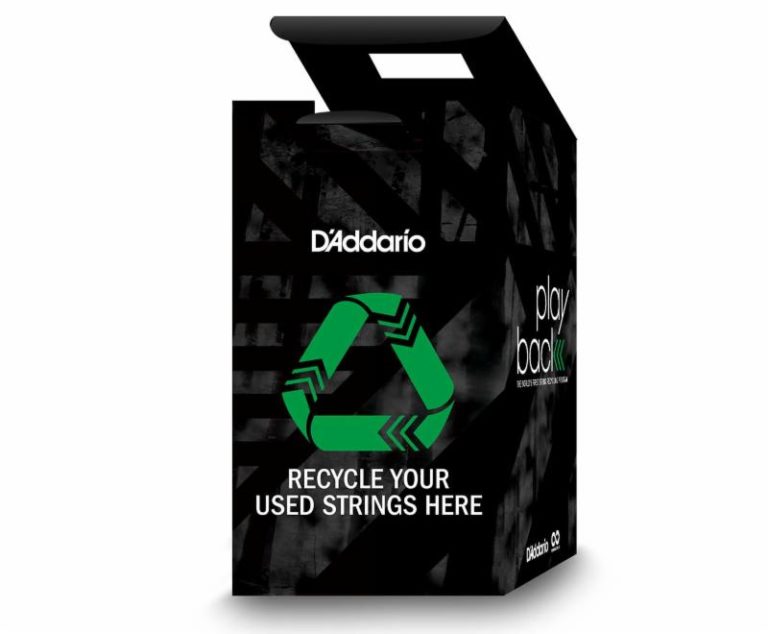
Guitar String Recycling
Musical instrument strings are not recycled through municipal recycling programs. That means that strings cannot be put in the recycling bin at the curb. As a result, it is estimated that more than 1.5 million lbs. of instrument string metal could be put into landfill every year.
Fortunately, TerraCycle and D’Addario have partnered to create a free recycling program for instrument strings and clippings. Calico Guitarworks is proud to participate in this great initiative.

Mods and Upgrades For Fender Stratocaster
Simple changes to an instruments hardware can make a huge improvement in the feel and tone. For some players, half of the fun is picking and choosing the mods you like to create a personalized guitar that fits your needs and tastes.

Fender Jazz Bass Mods and Upgrades
The Jazz Bass is an iconic Leo Fender design. The second of his ground breaking solid body basses, Since its introduction in 1960, this instrument has been fundamental in the development of players sounds in musical styles across the spectrum: funk, disco, Reggae, progressive rock, jazz fusion, etc. Below are a few ideas to help you put your own spin on this classic design.