Fender Factory Tour

Fender Factory Tour

IMG_0709

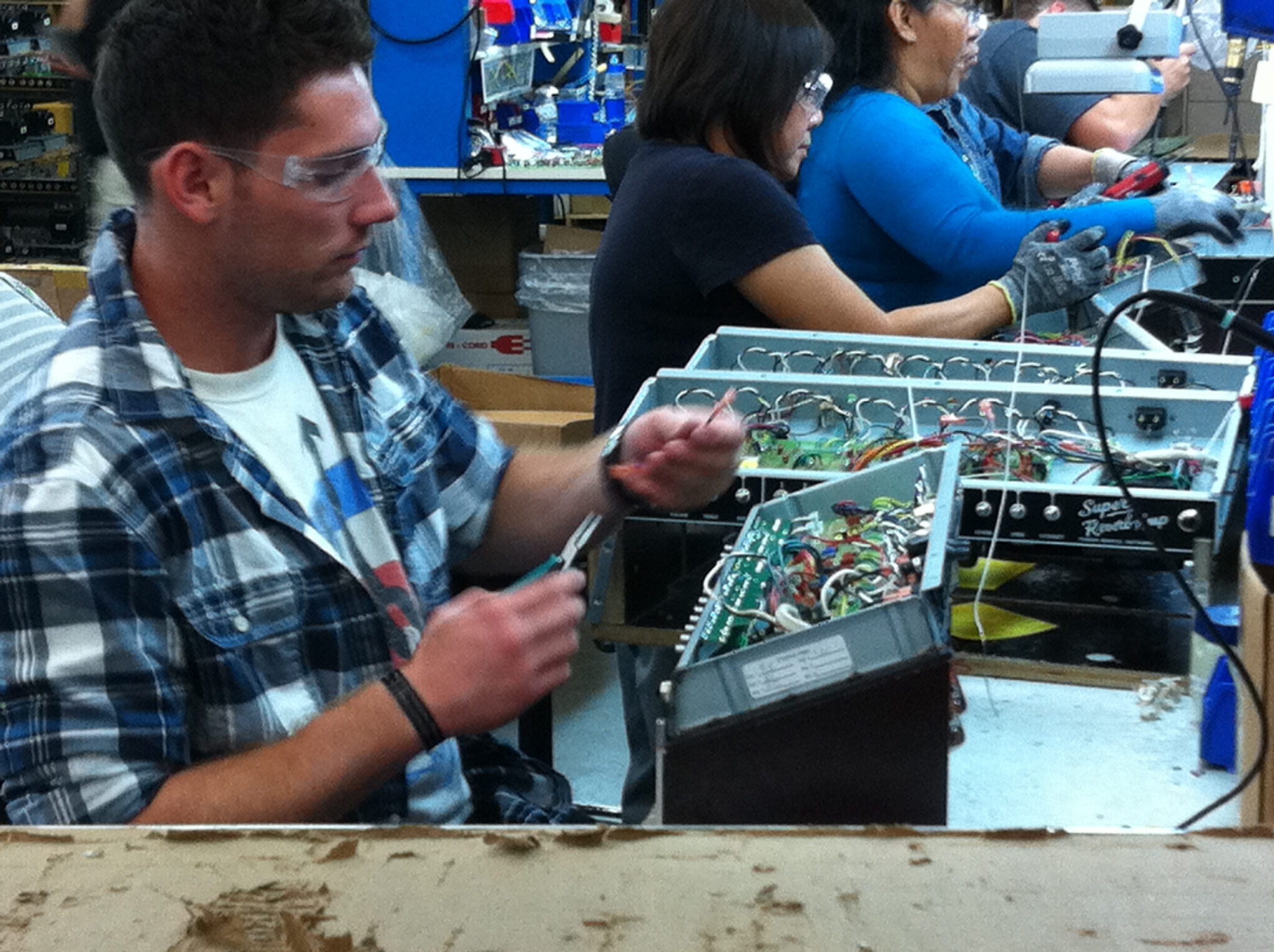
Fender’s Corona facility was opened in 1985, coinciding with the end of the brand’s ownership by the Columbia Broadcasting System (CBS) and the creation of the Fender Musical Instruments Corporation (FMIC). While Fender has factories and offices all over the world, this is where the flagship guitars and basses are made. American Series Stratocasters, Telecasters, Precision and Jazz Basses are all manufactured here. This is also where they assemble their American made amplifiers and the home of the Fender Custom Shop.

In September of 2011, I was able to tour and photograph the facility. At the time, Fender had recently resumed offering public tours. What follows is largely a repost of content that originally appeared on an earlier version of this website. Having rediscovered the photos, I am resharing them in the hope that they may be of interest.

Parts Production

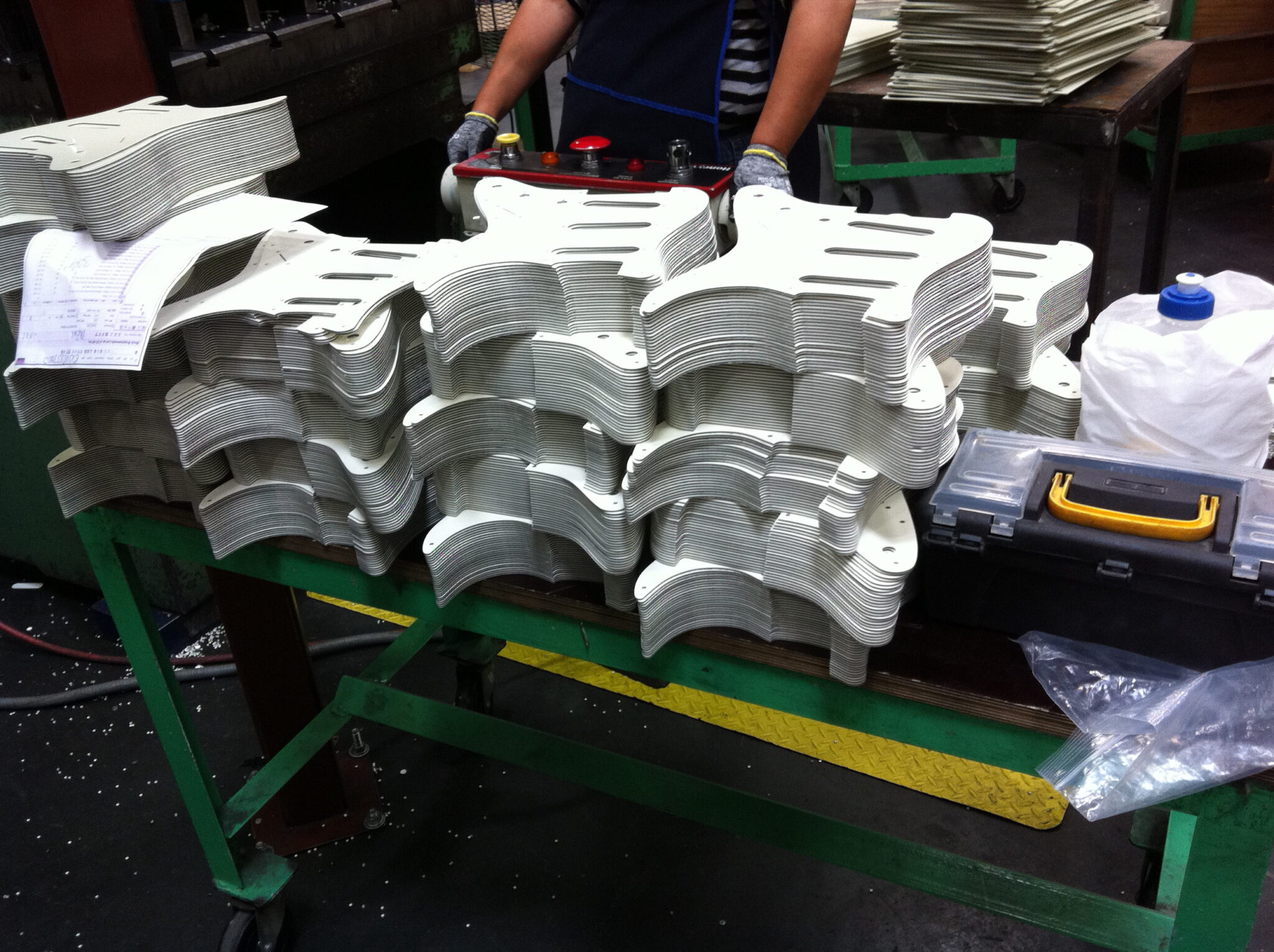
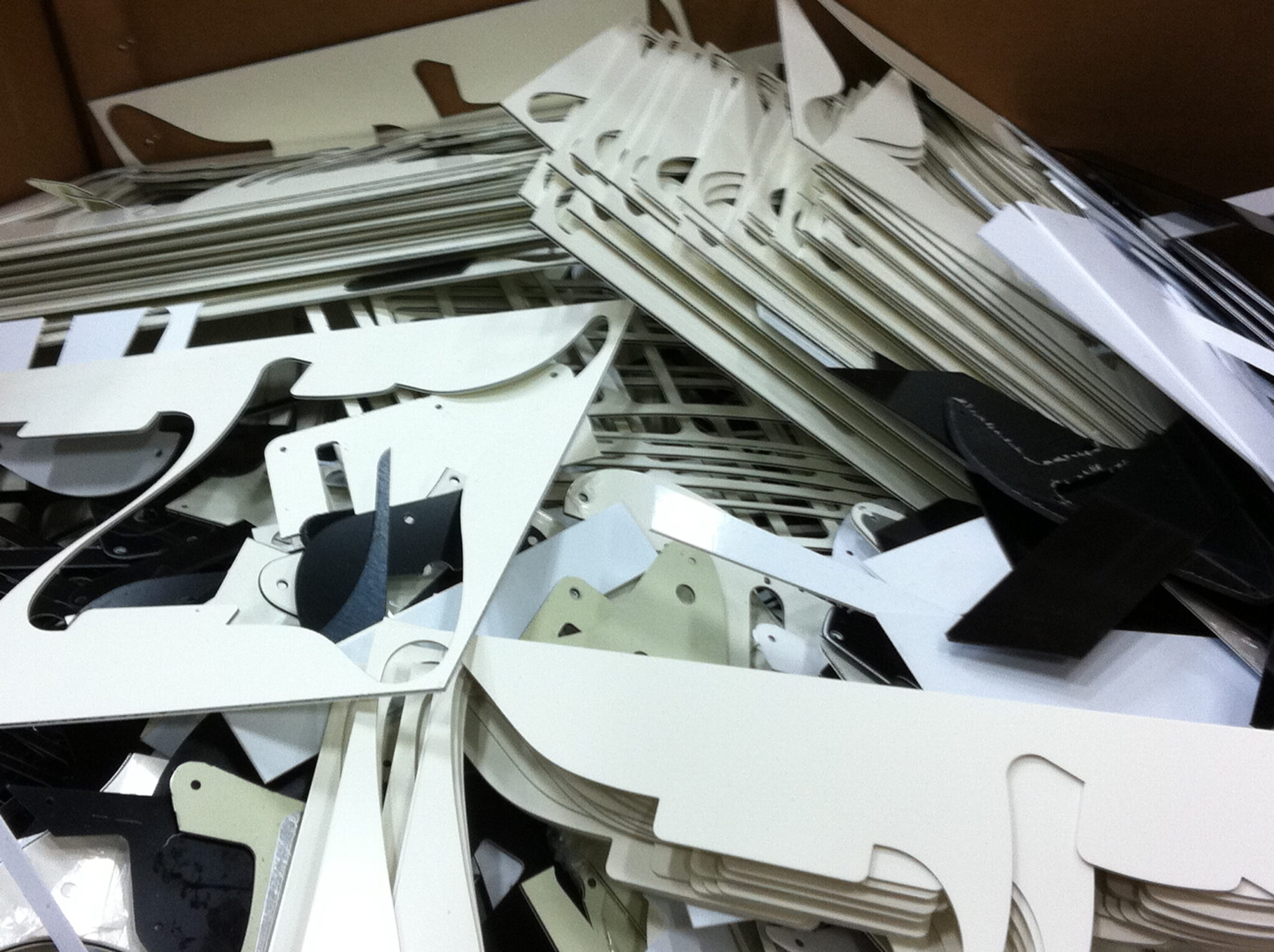
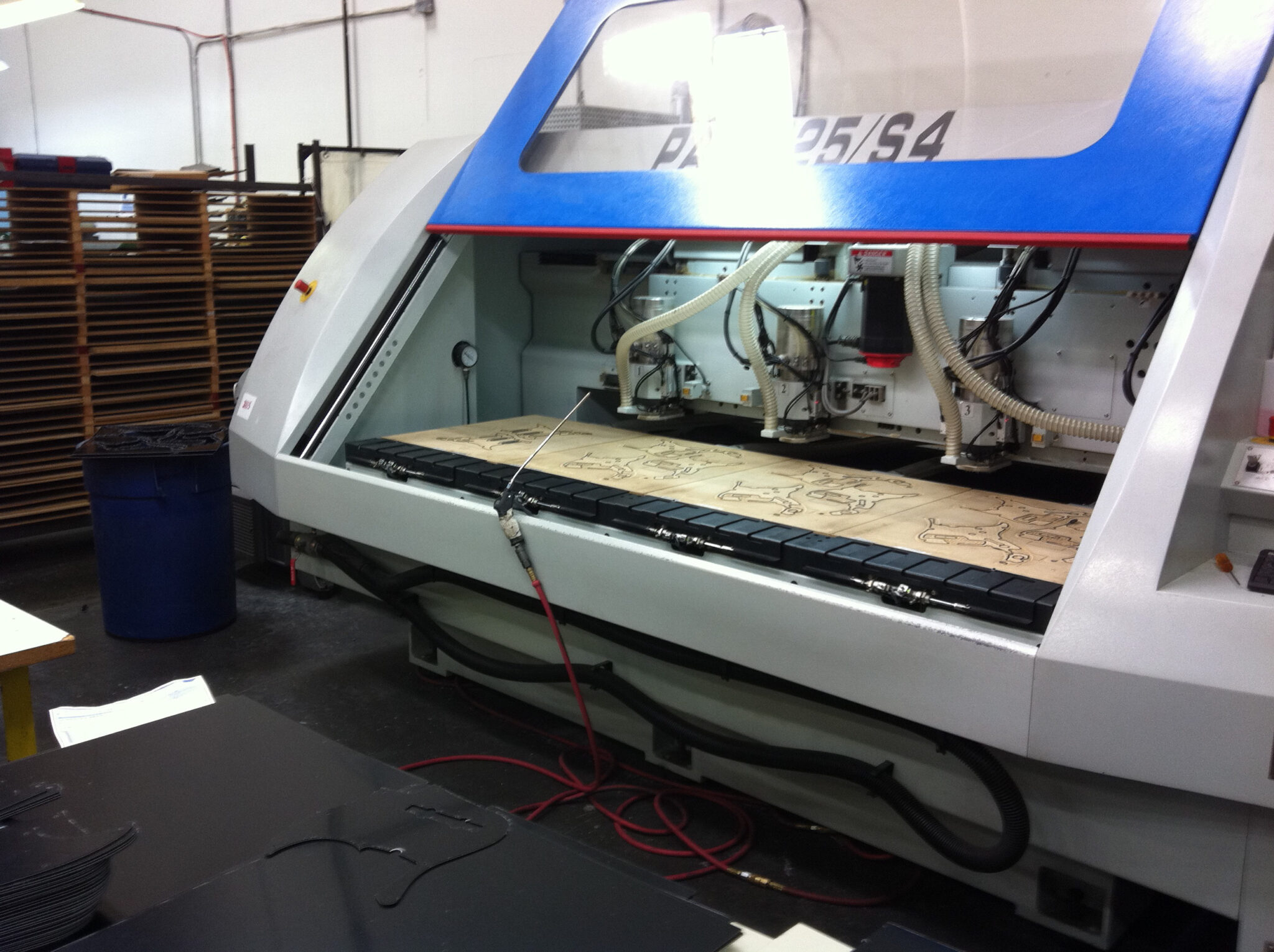
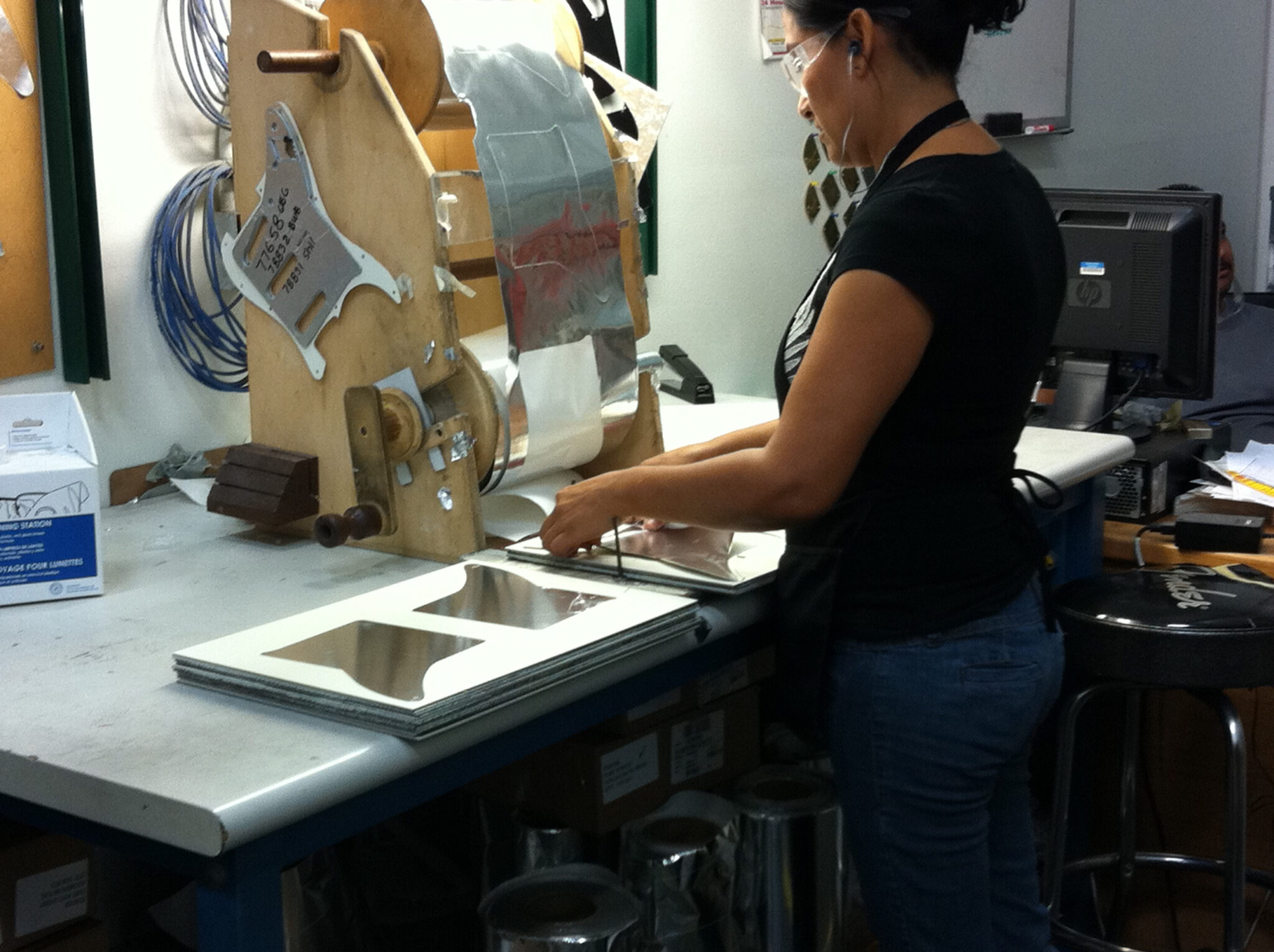
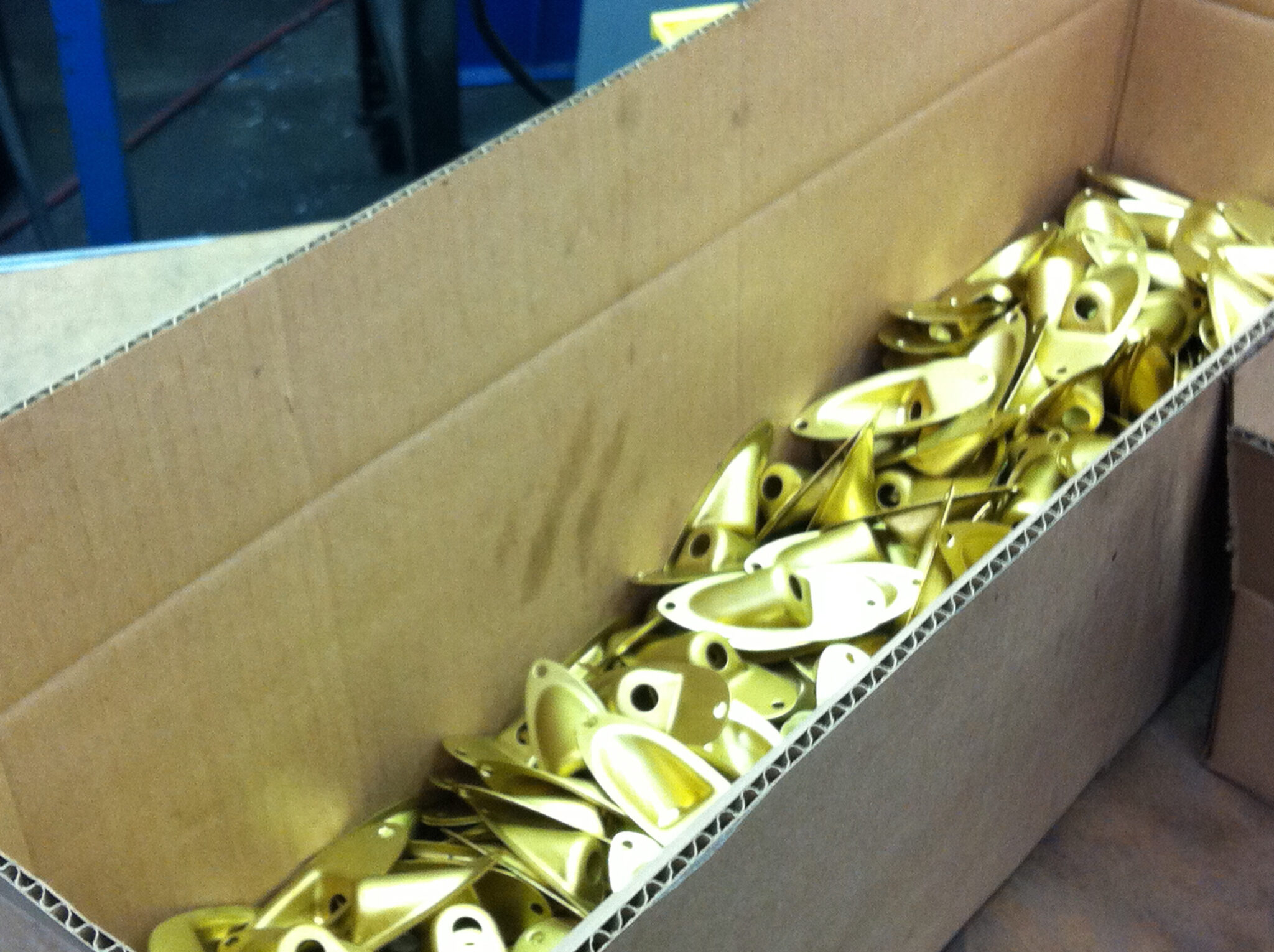
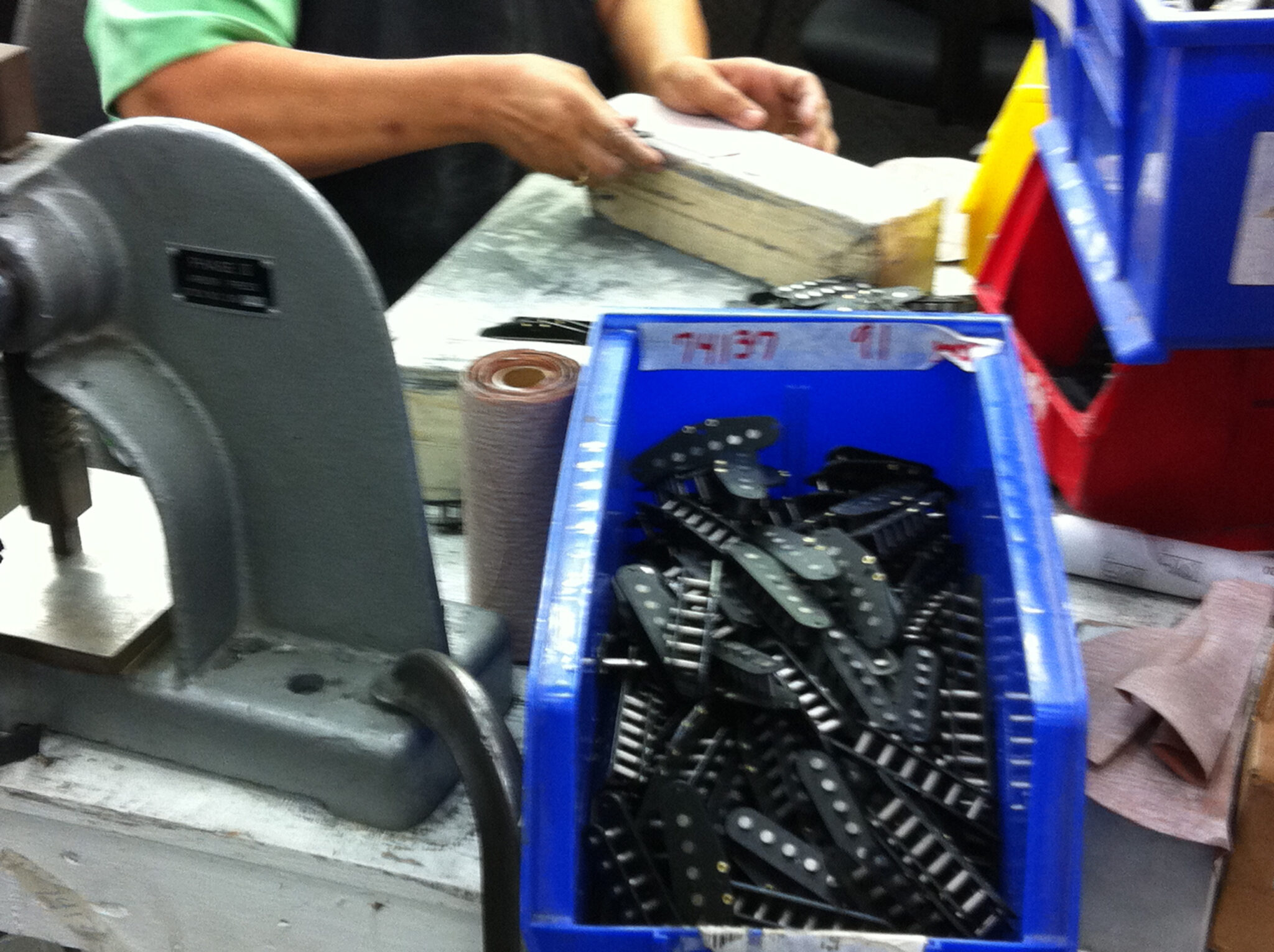
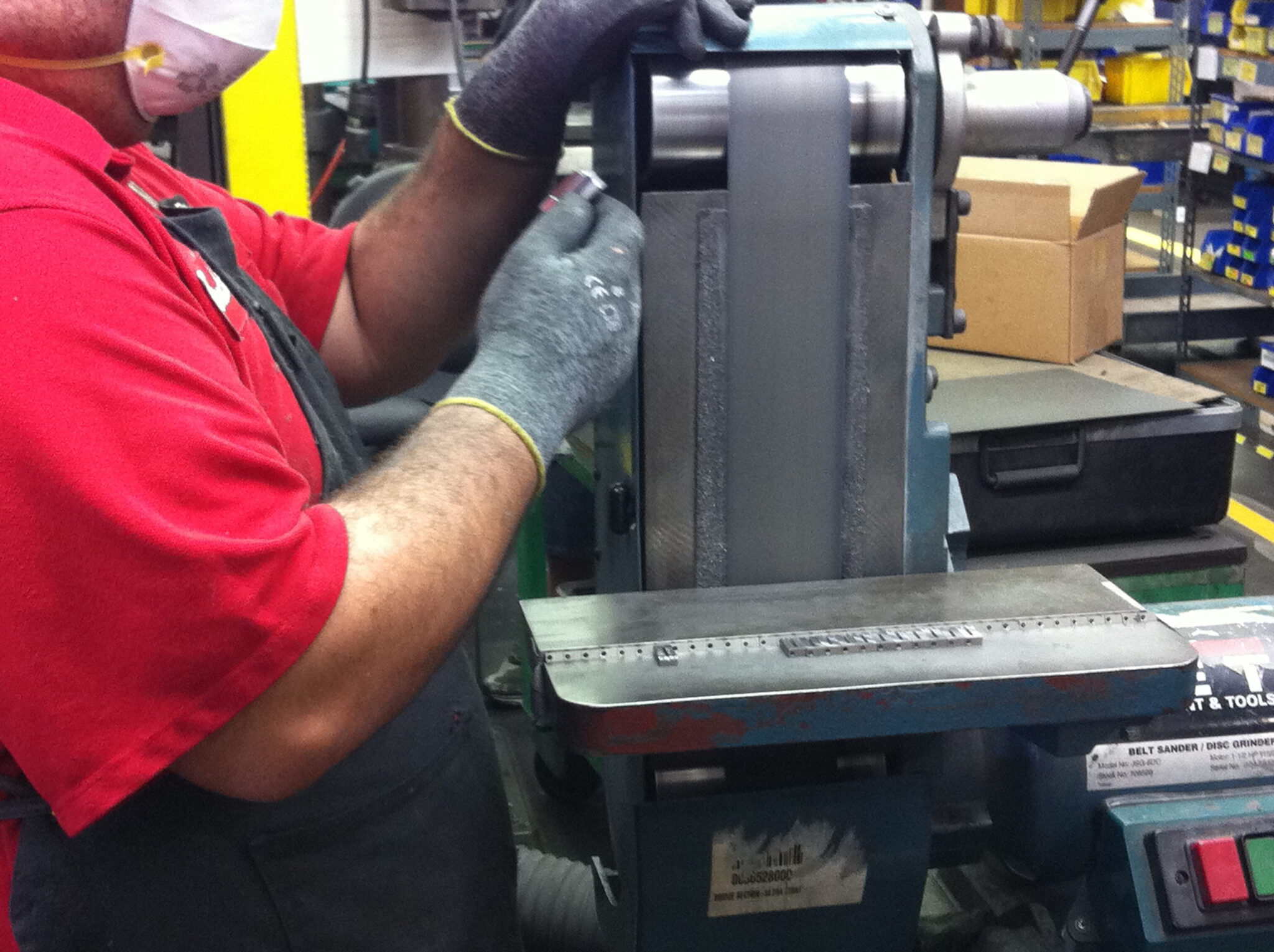
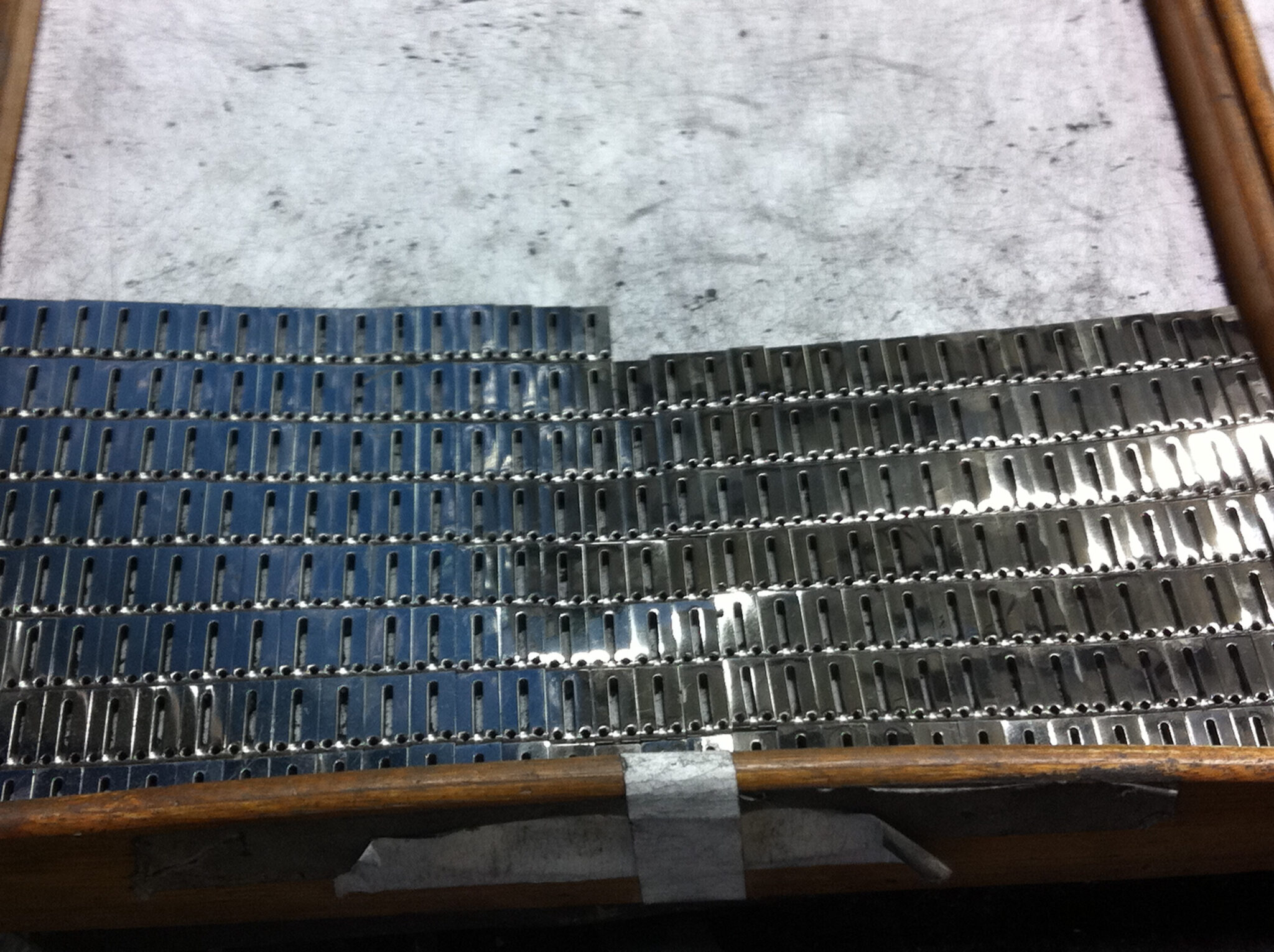
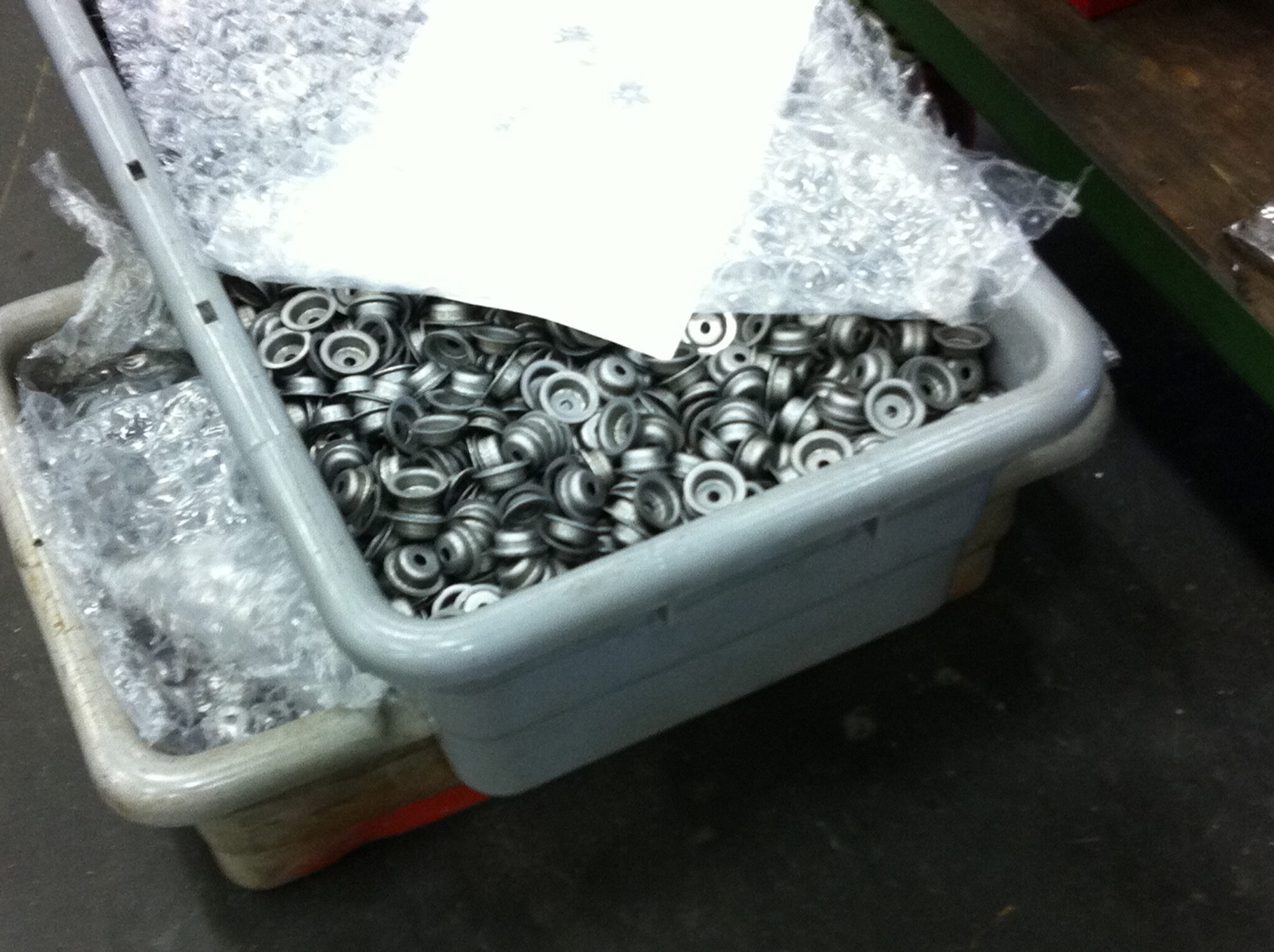
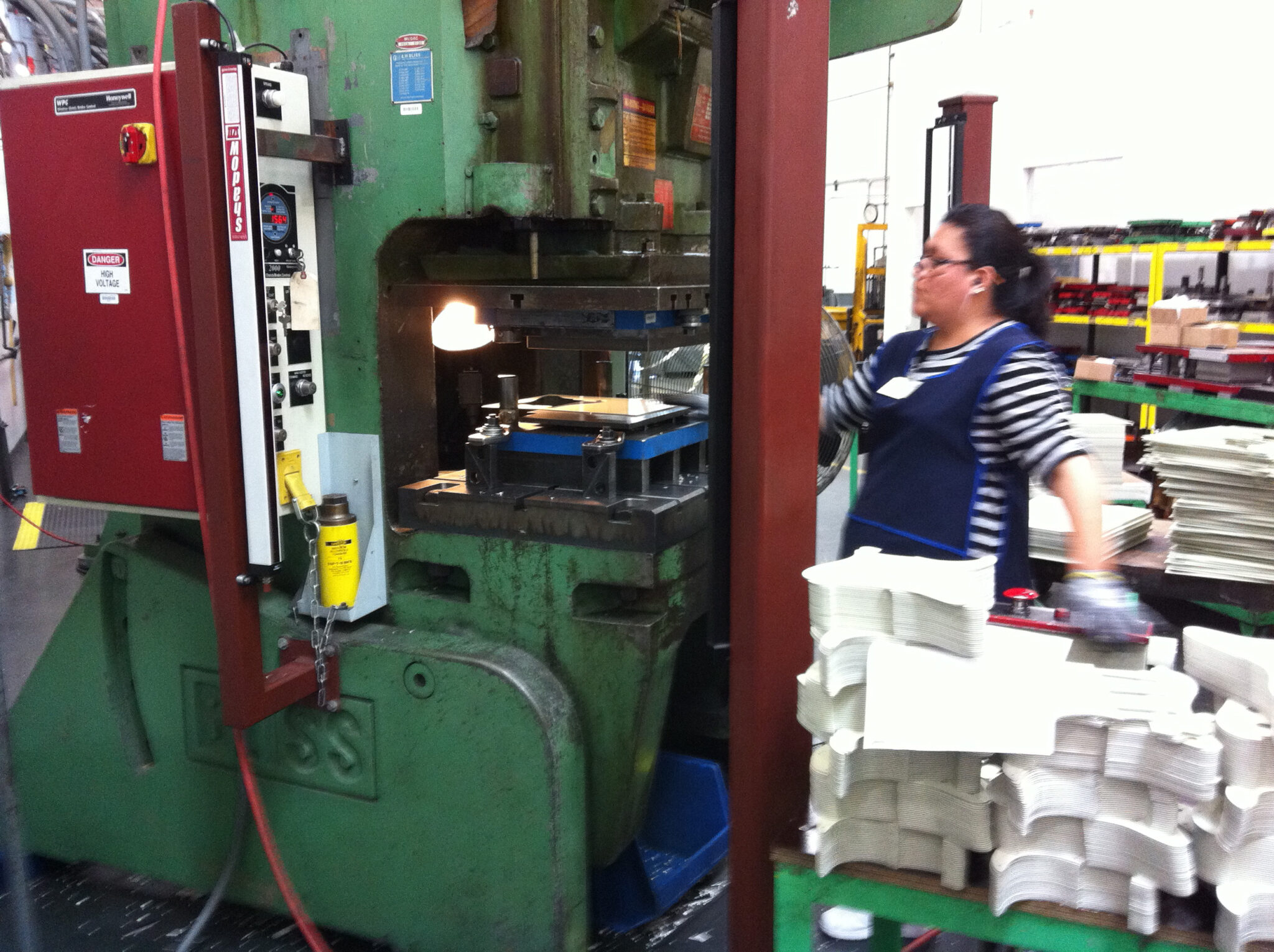
The tour began in a section of the factory where workers make parts such as pickguards and backplates. Our guide was quick to point out that Fender takes pride in manufacturing many of these parts in-house, using machines from the original Fullerton Factory!

They also had a modern computer controlled laser cutter on hand too that we were told was new and they were experimenting with.  

The Neck Department

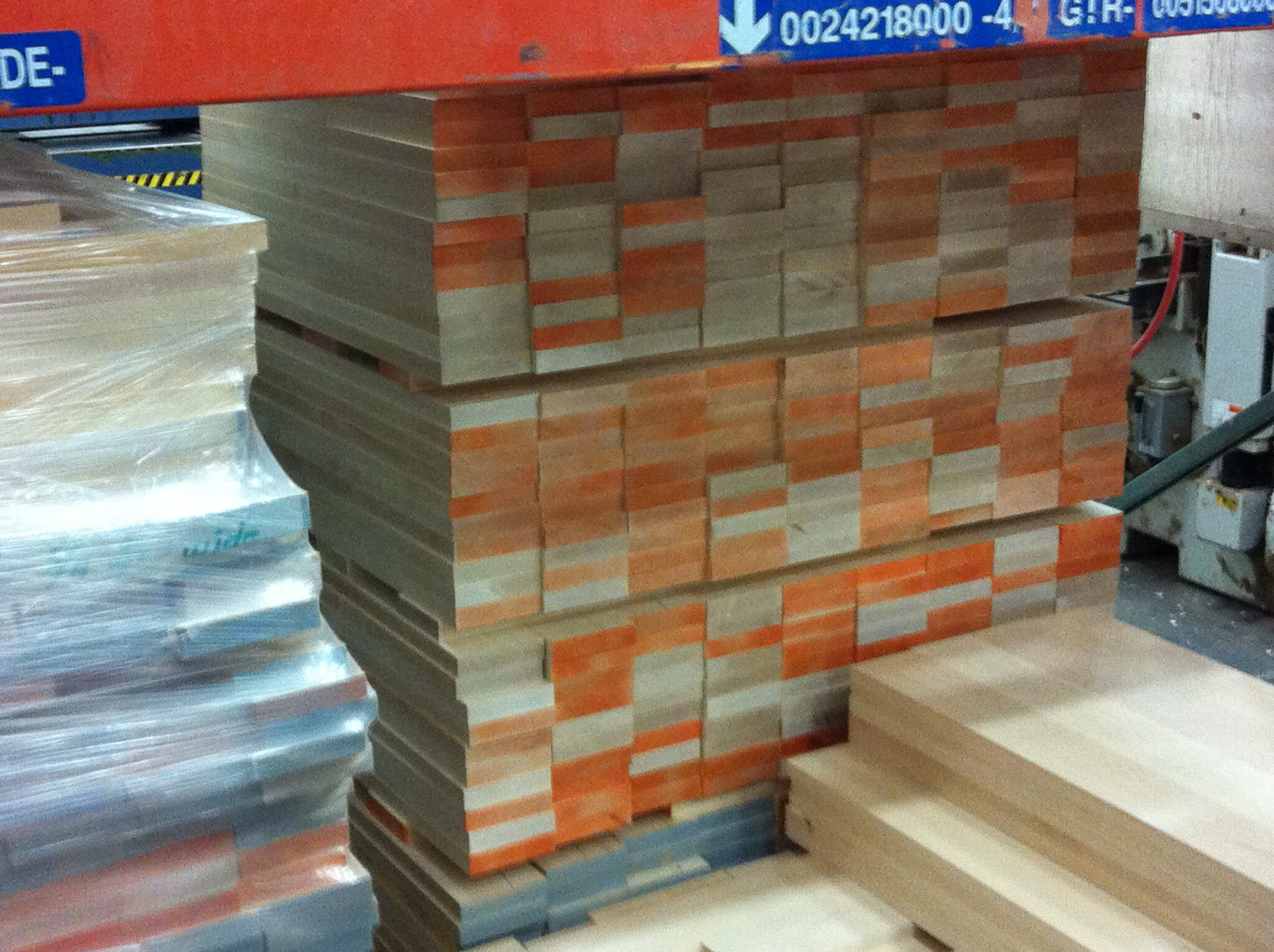
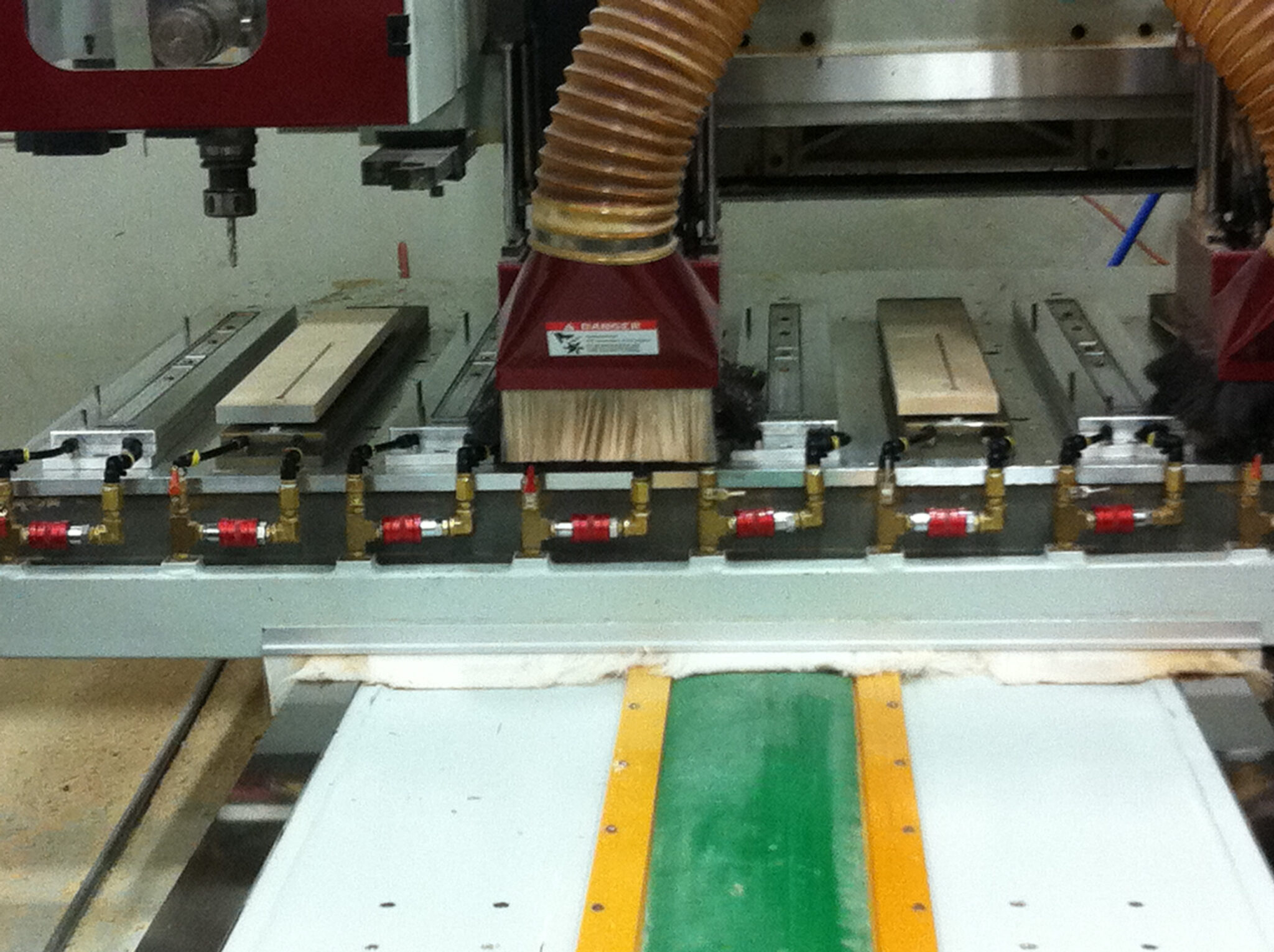
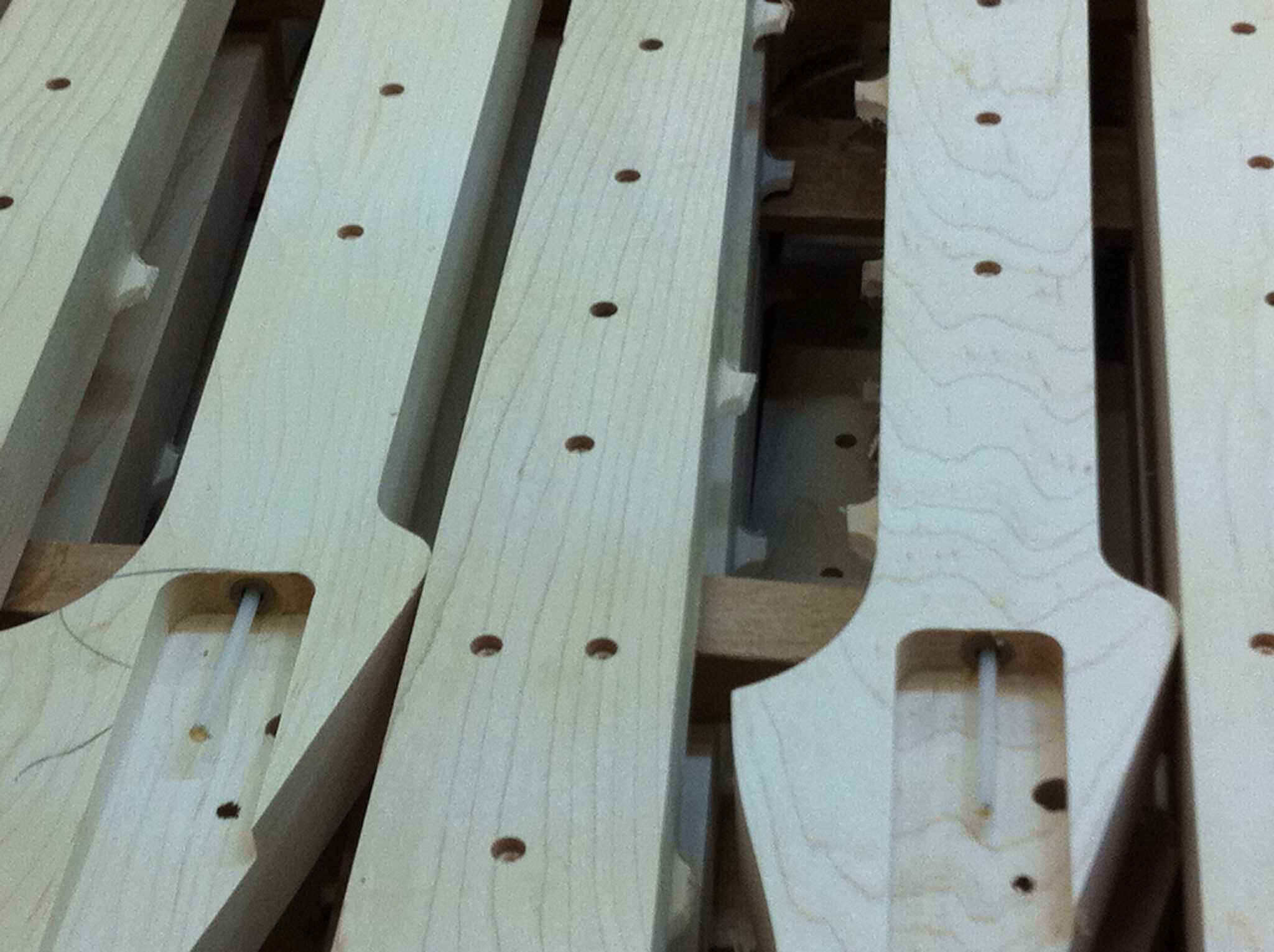
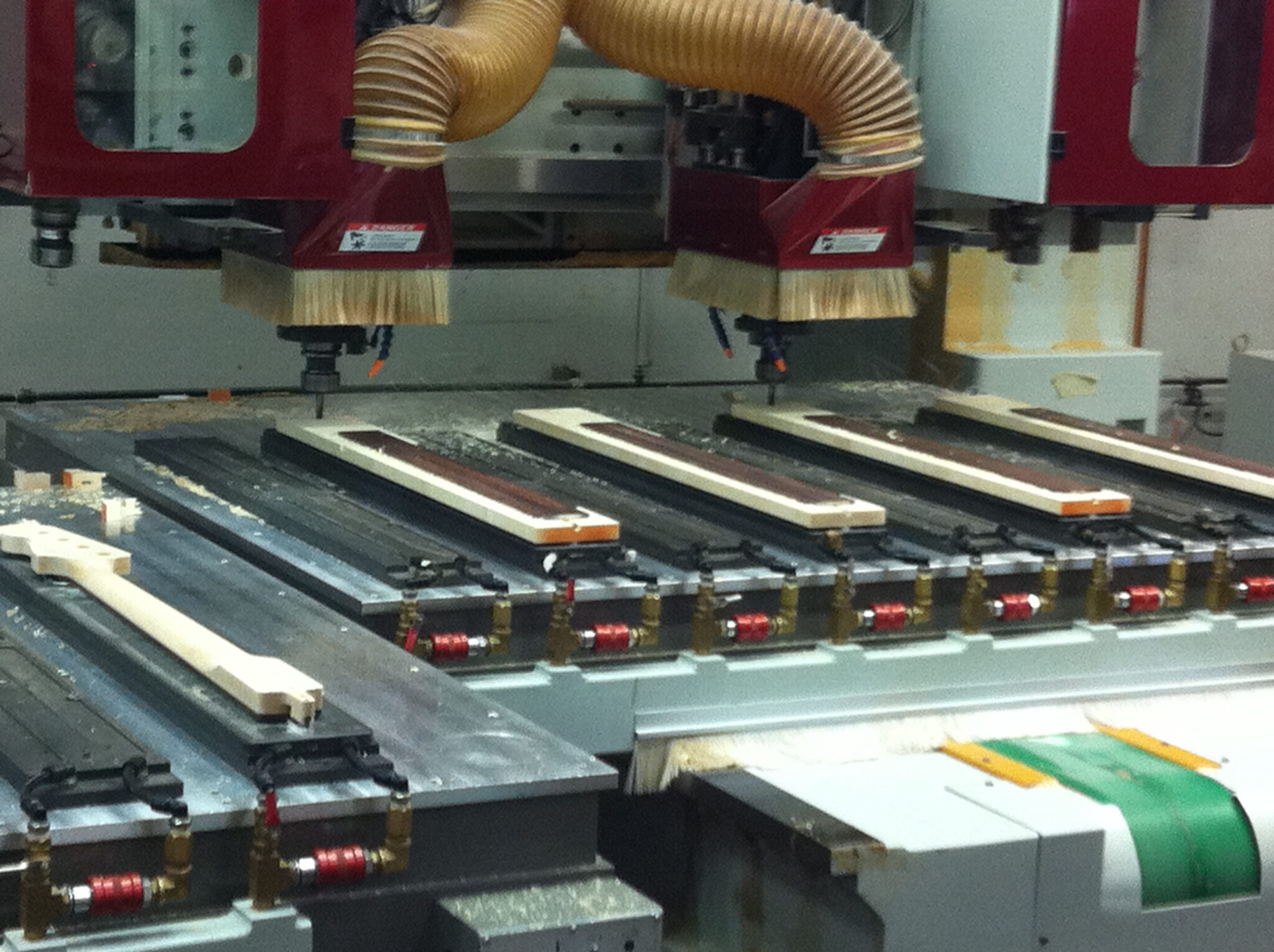
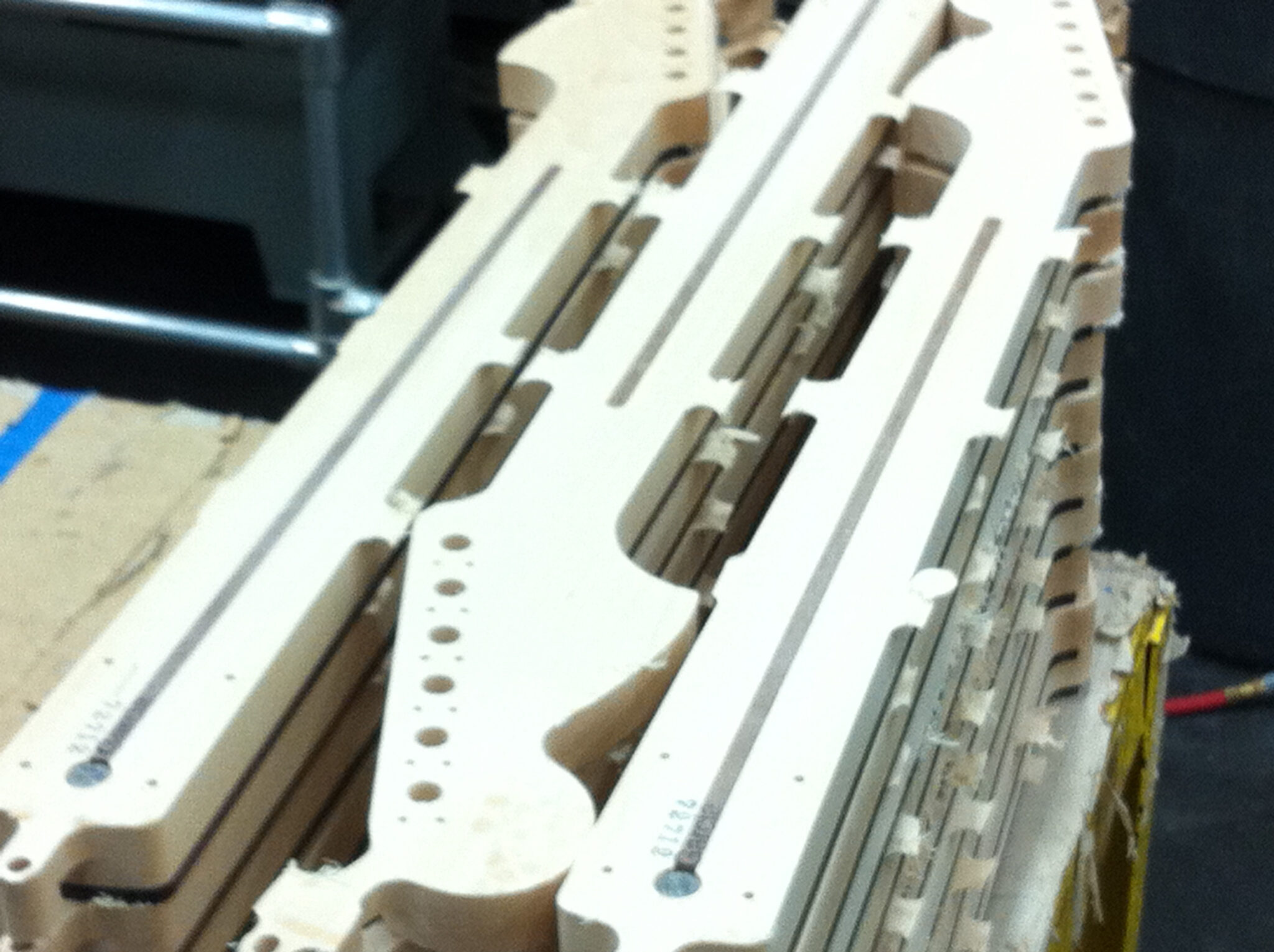
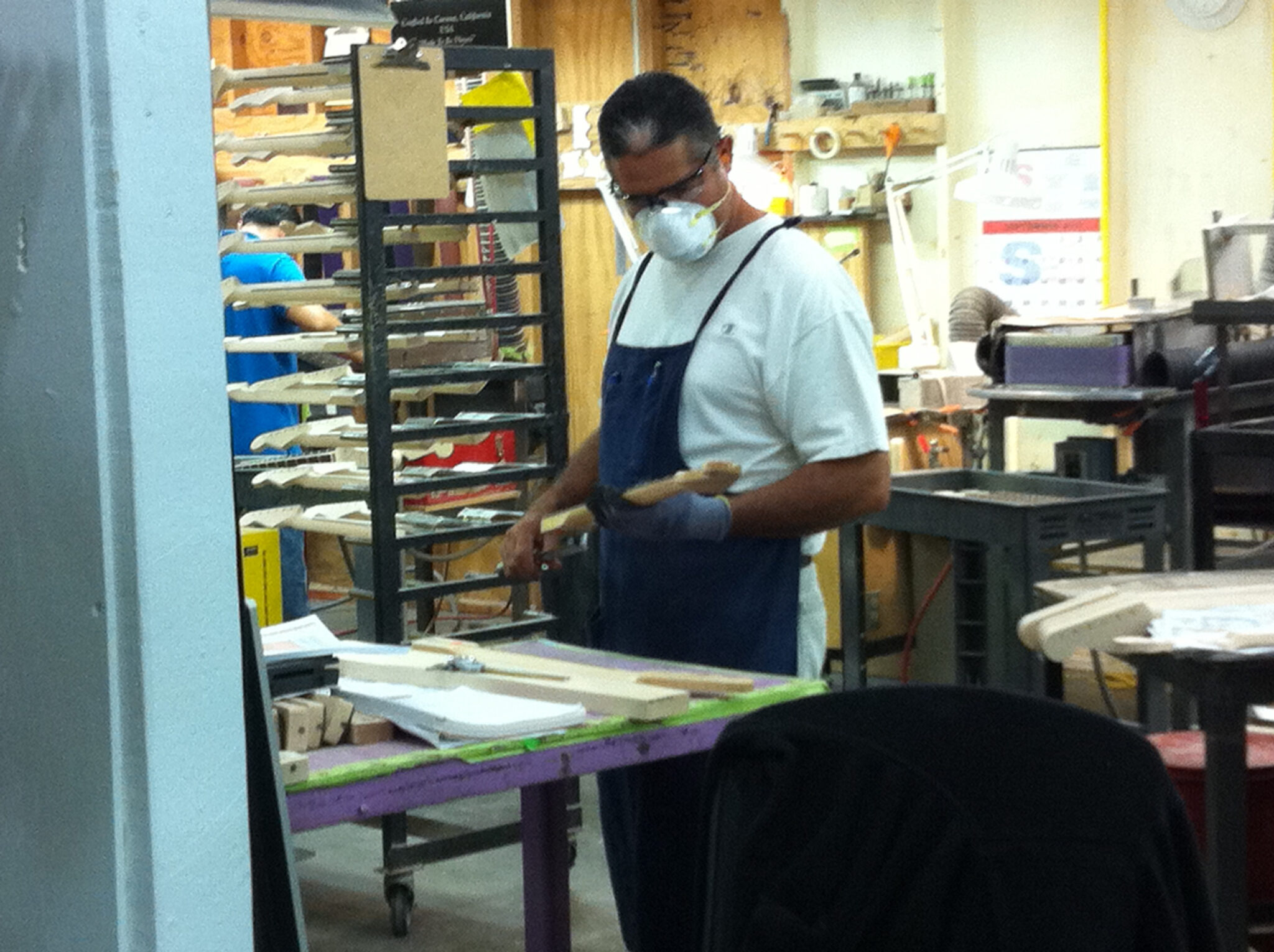
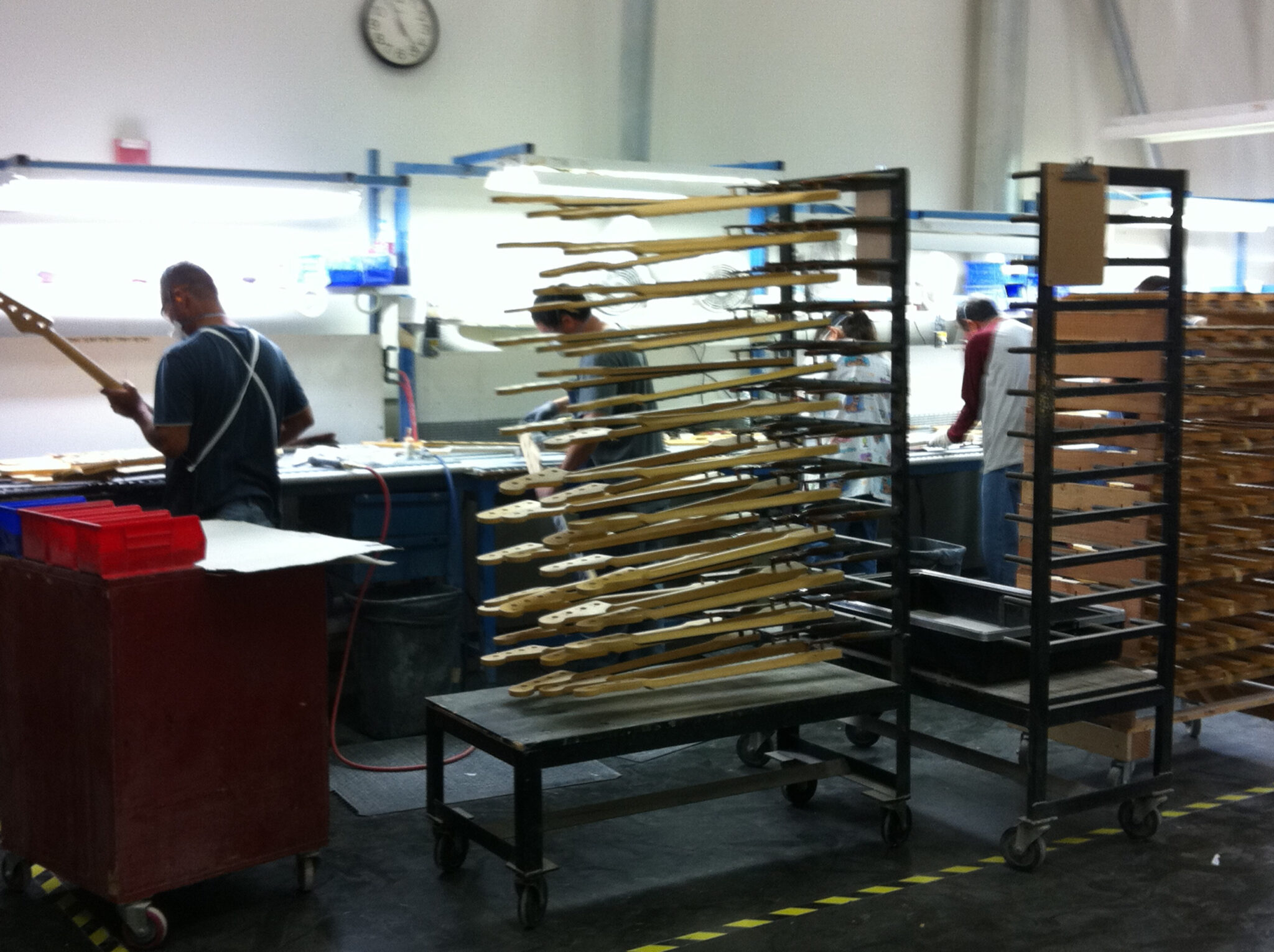
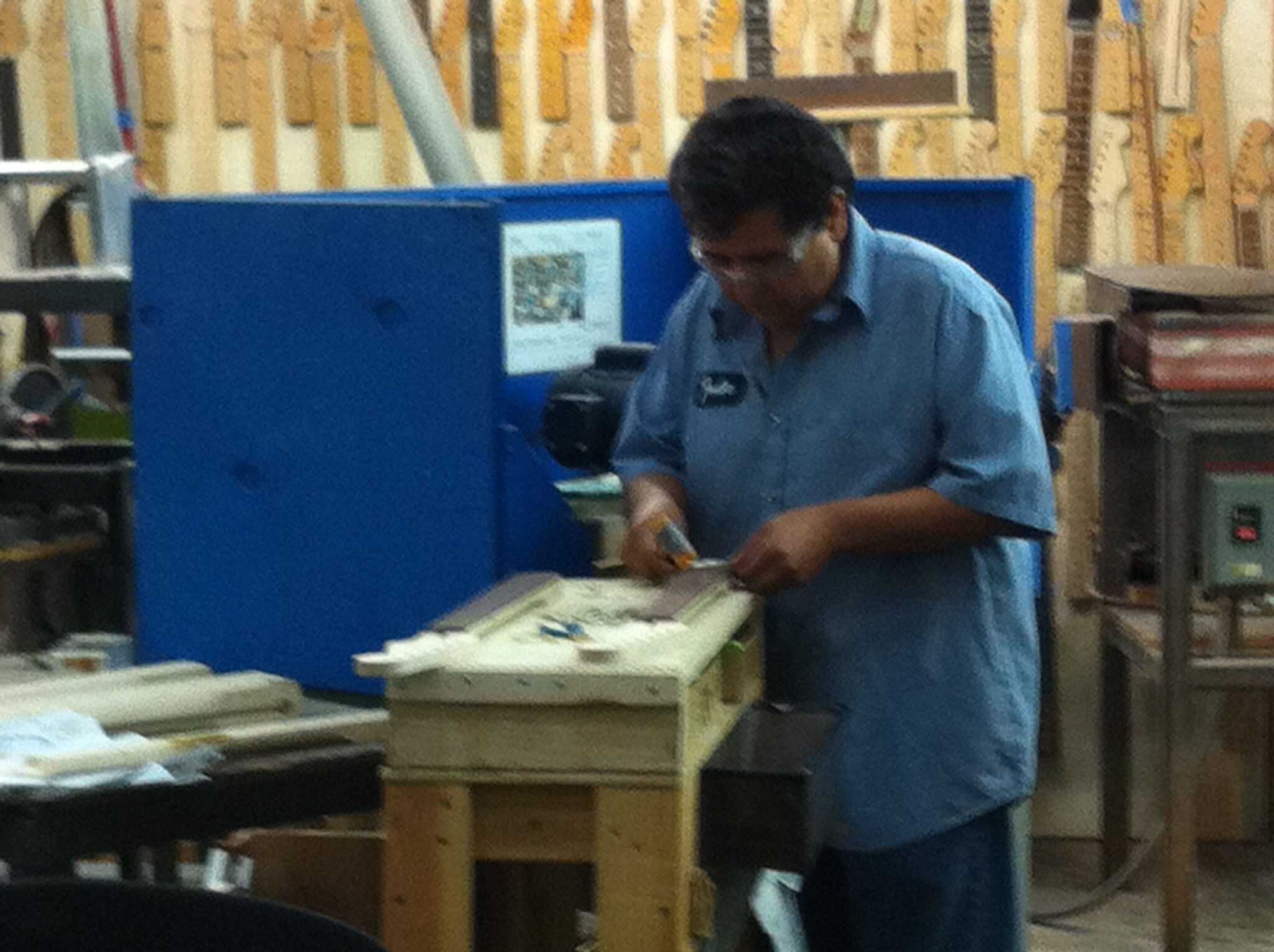
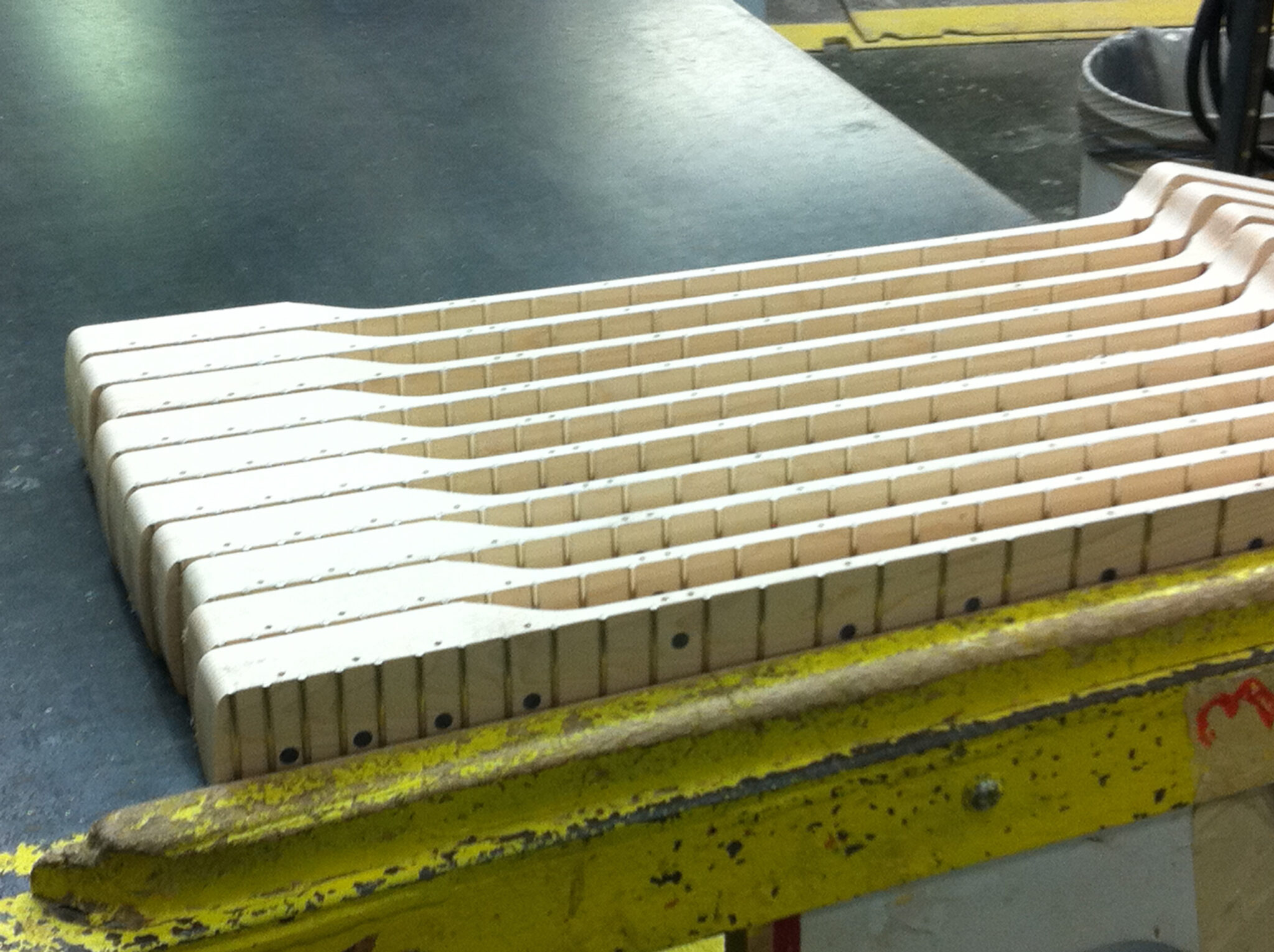
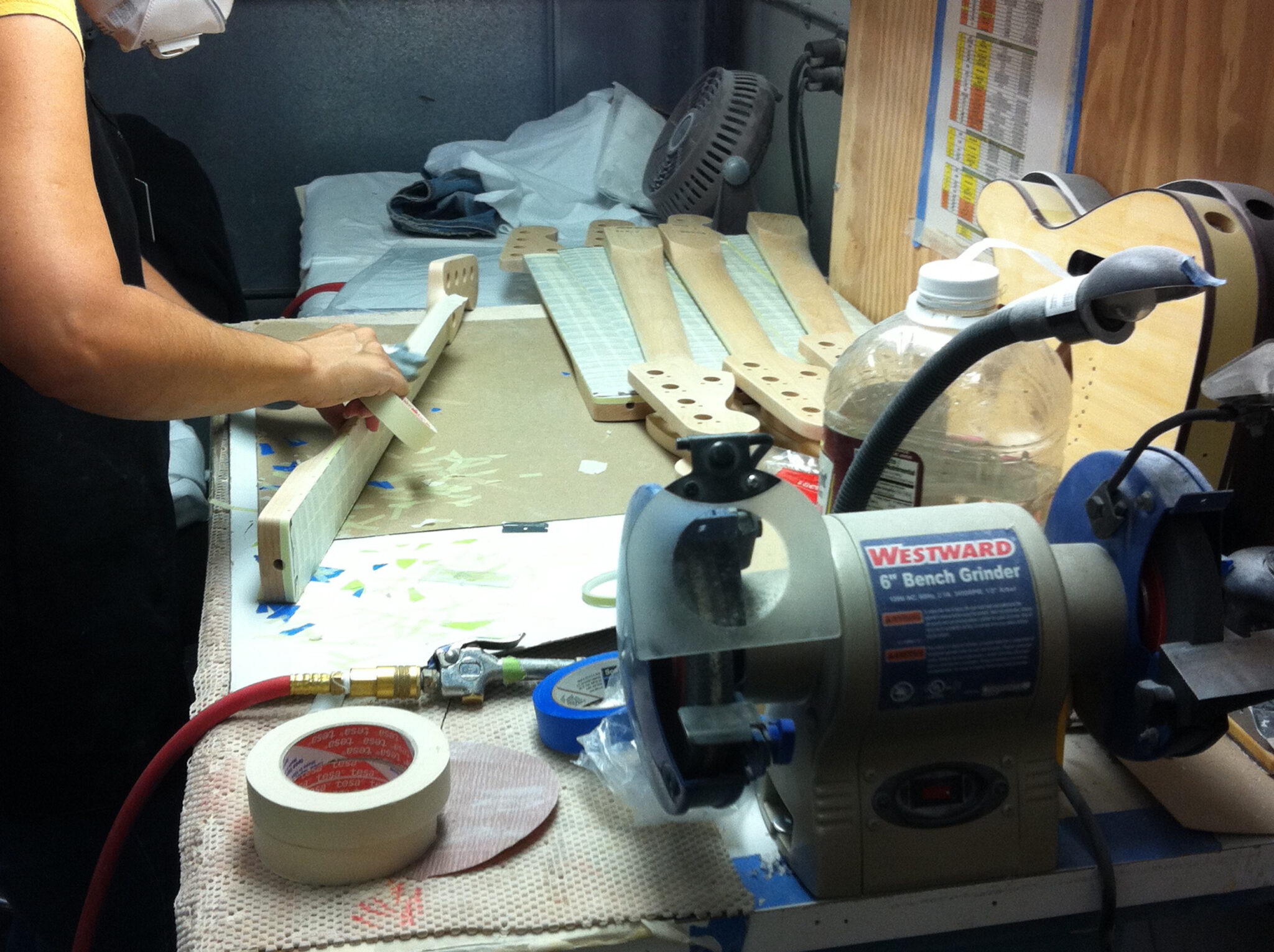
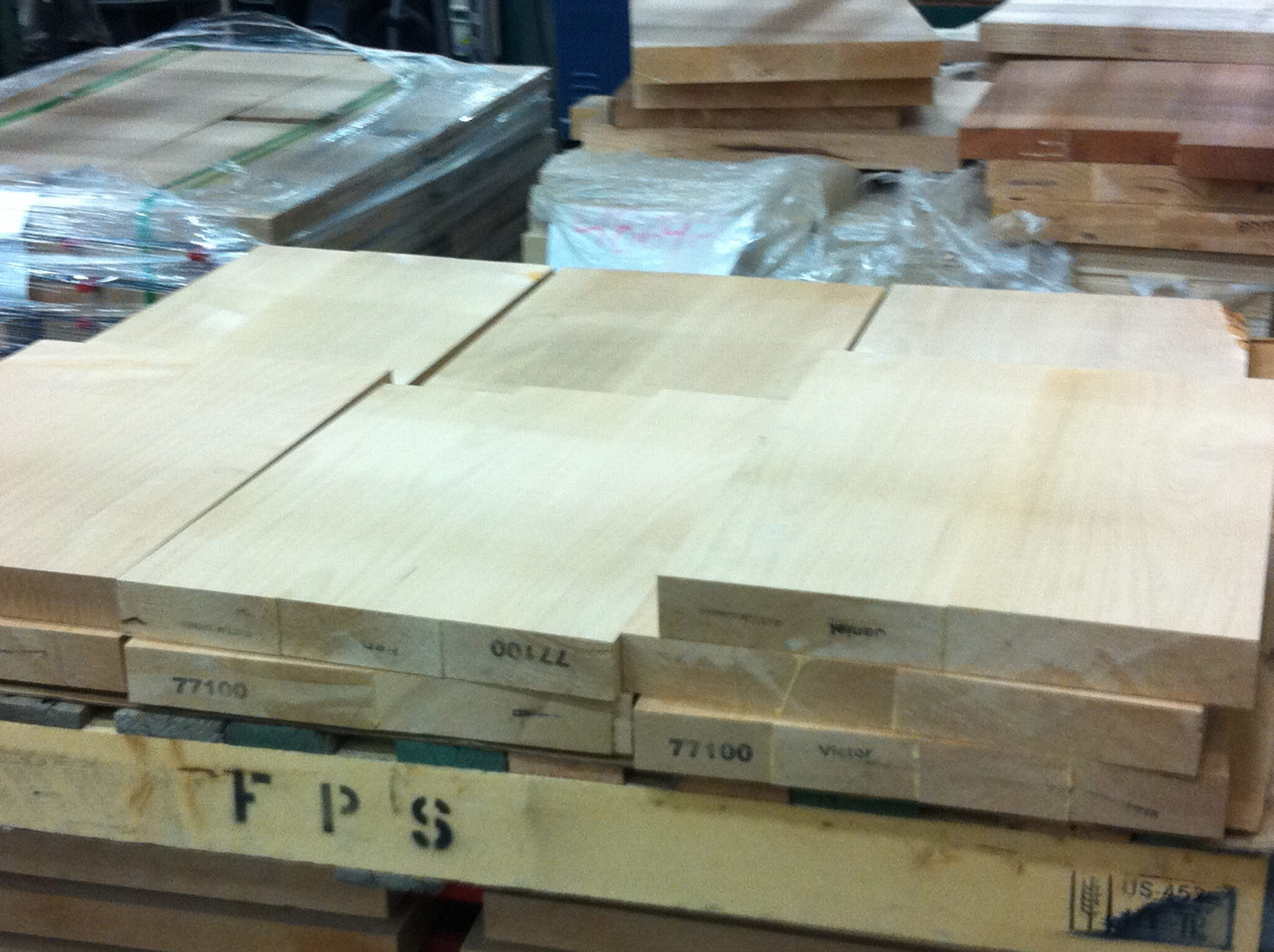
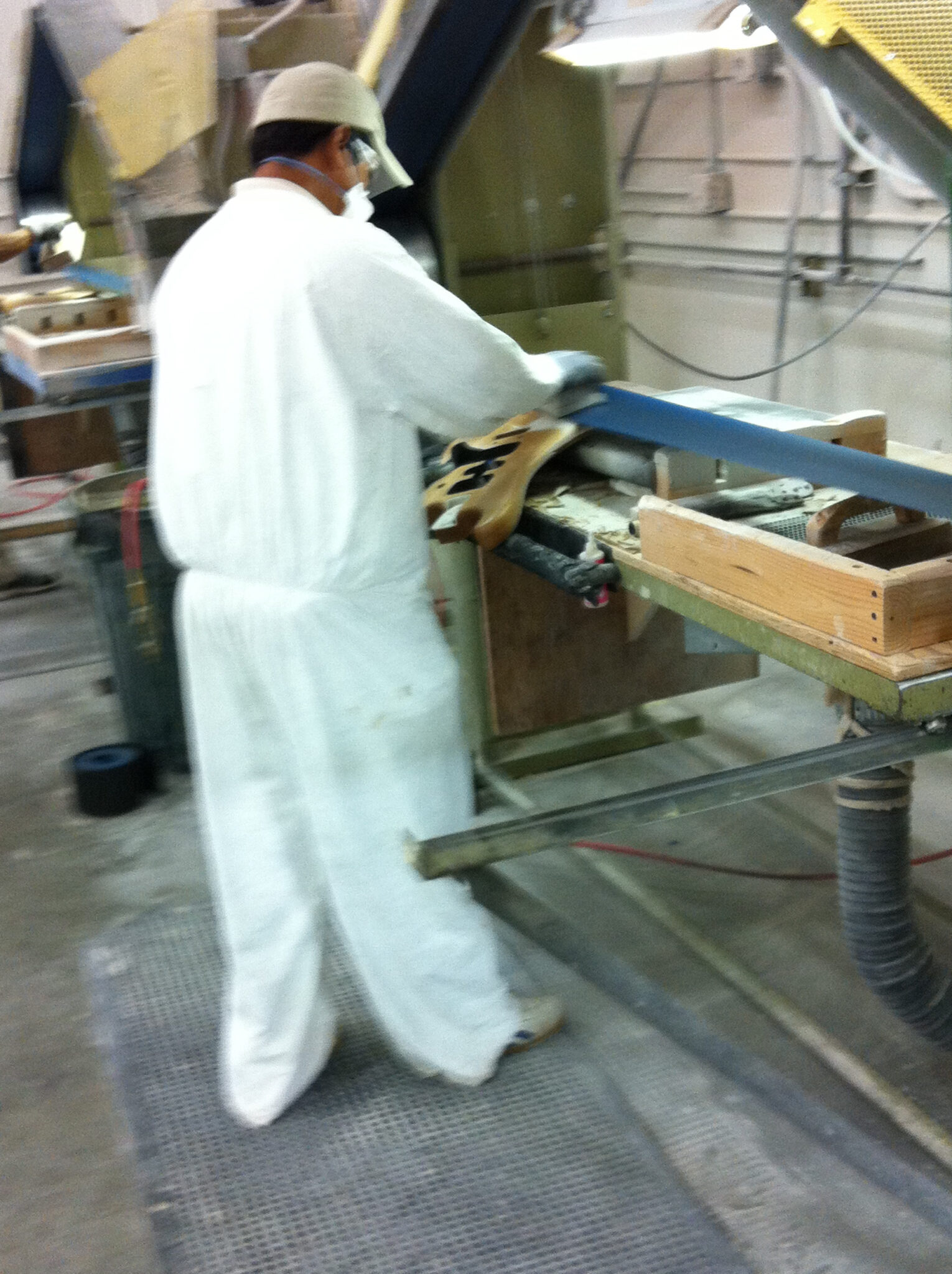
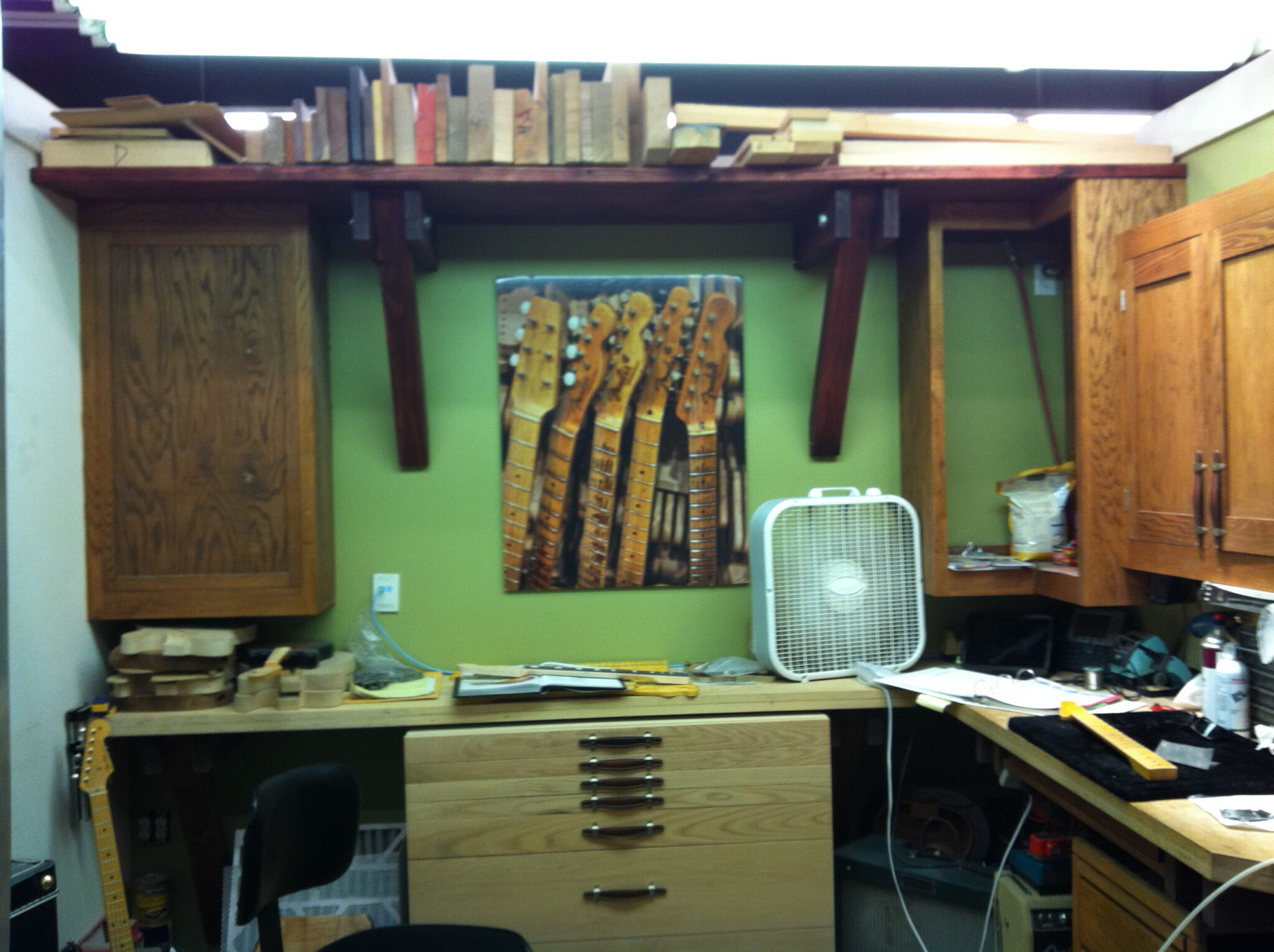
Next it was over to the wood shop where we saw the necks being made. Even with the aid of modern CNC technology, much of this work must still be done by hand!

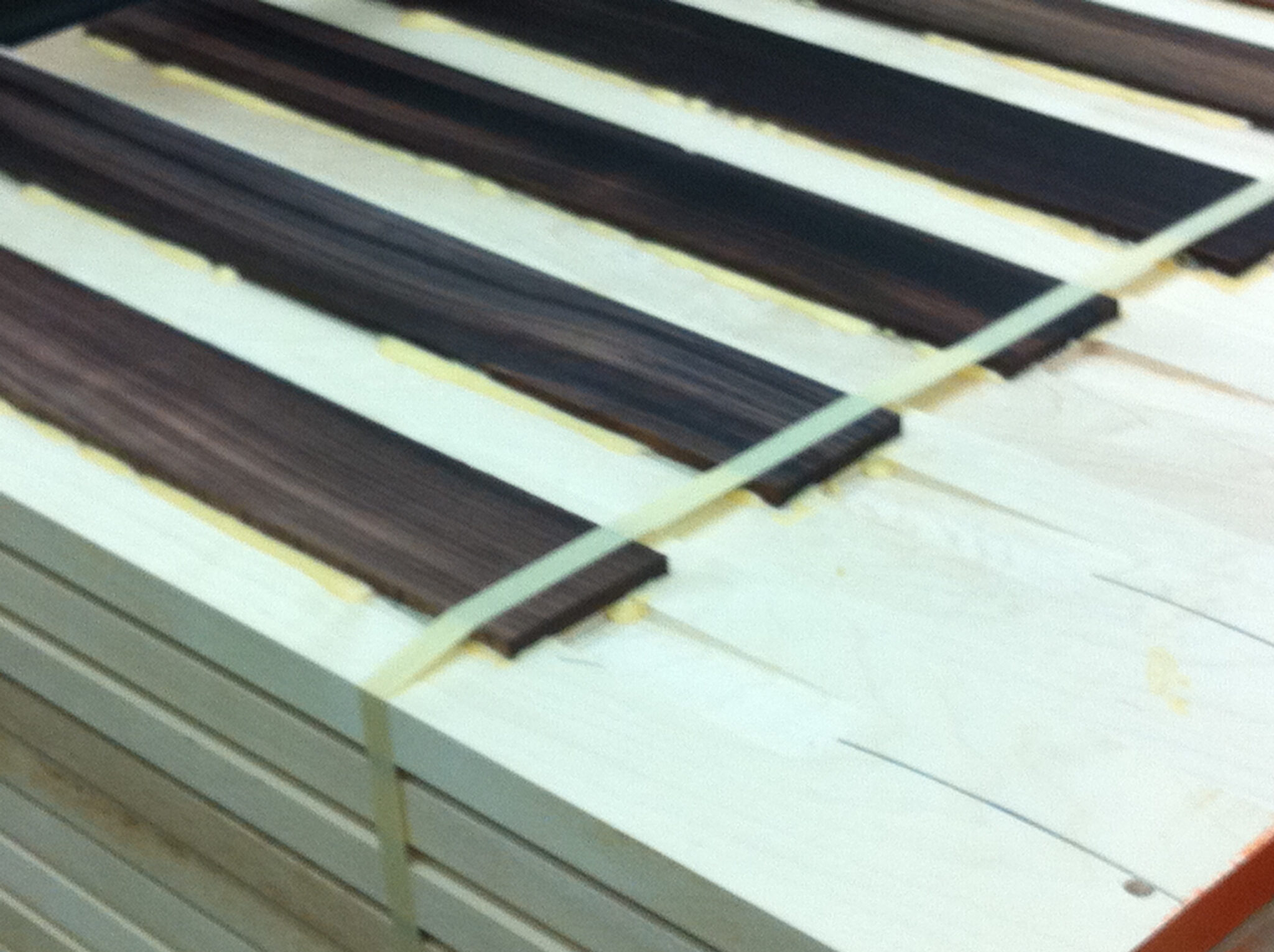
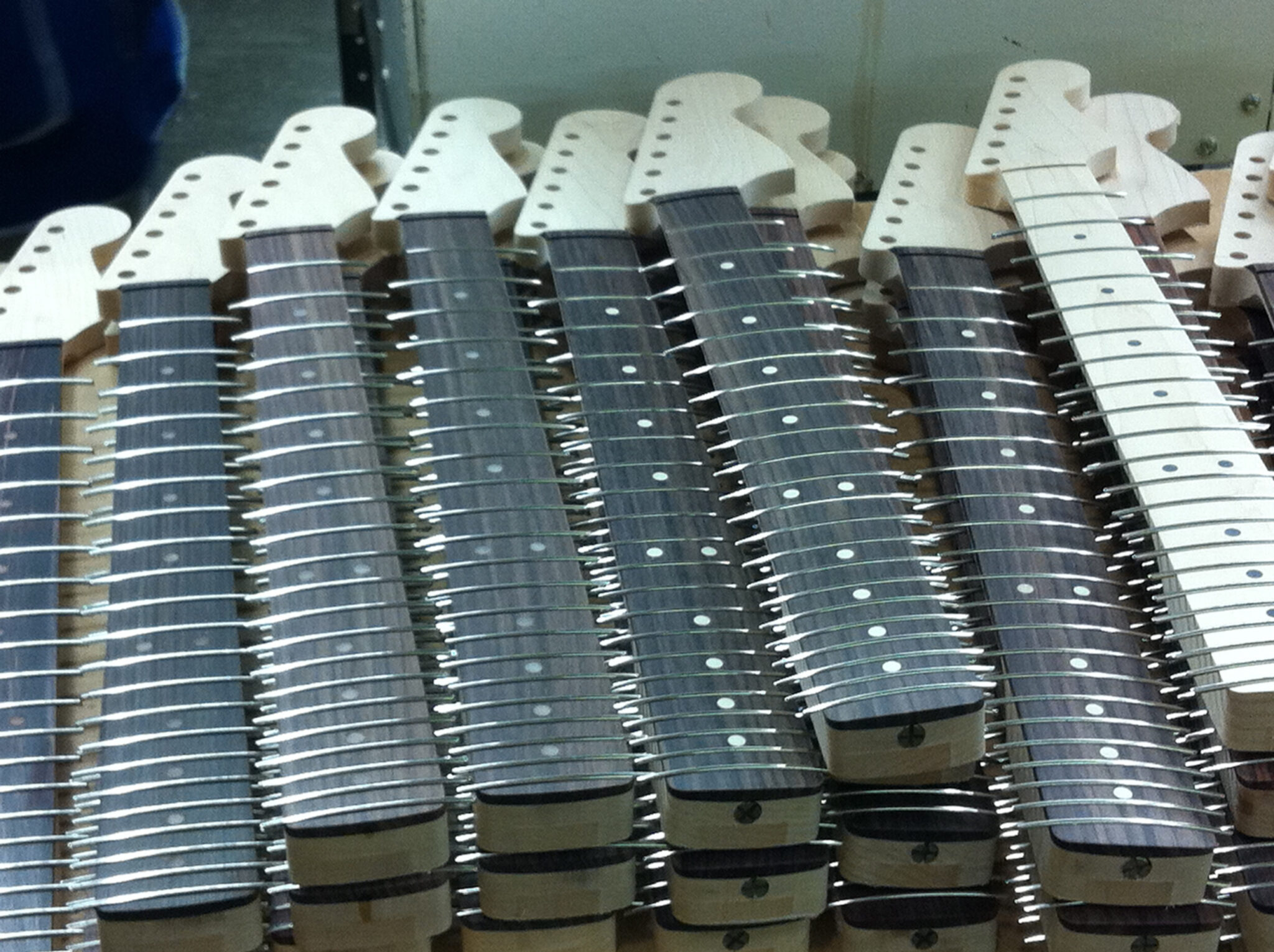
Both one piece maple necks and two piece necks with rosewood fingerboards were in production.

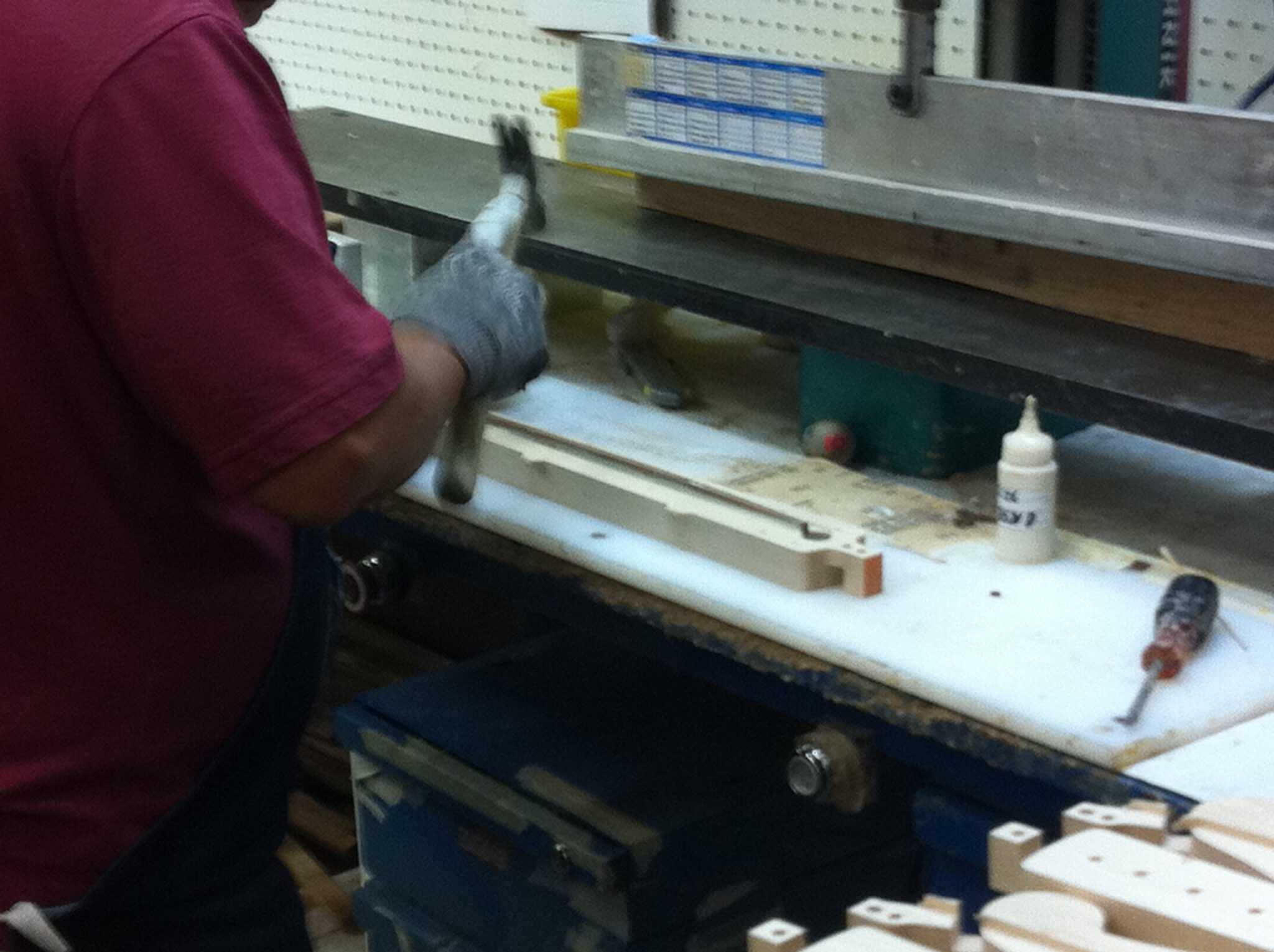
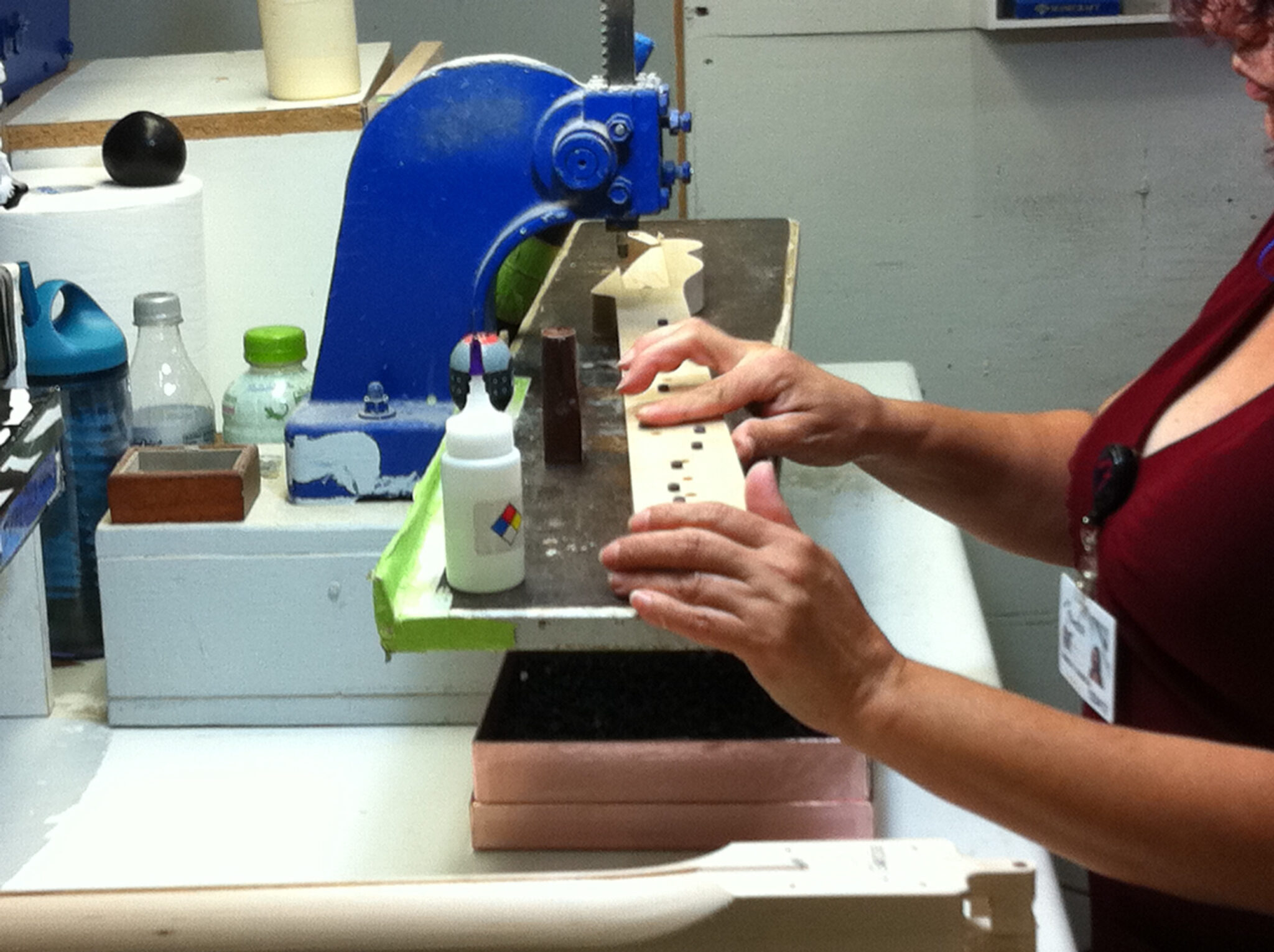
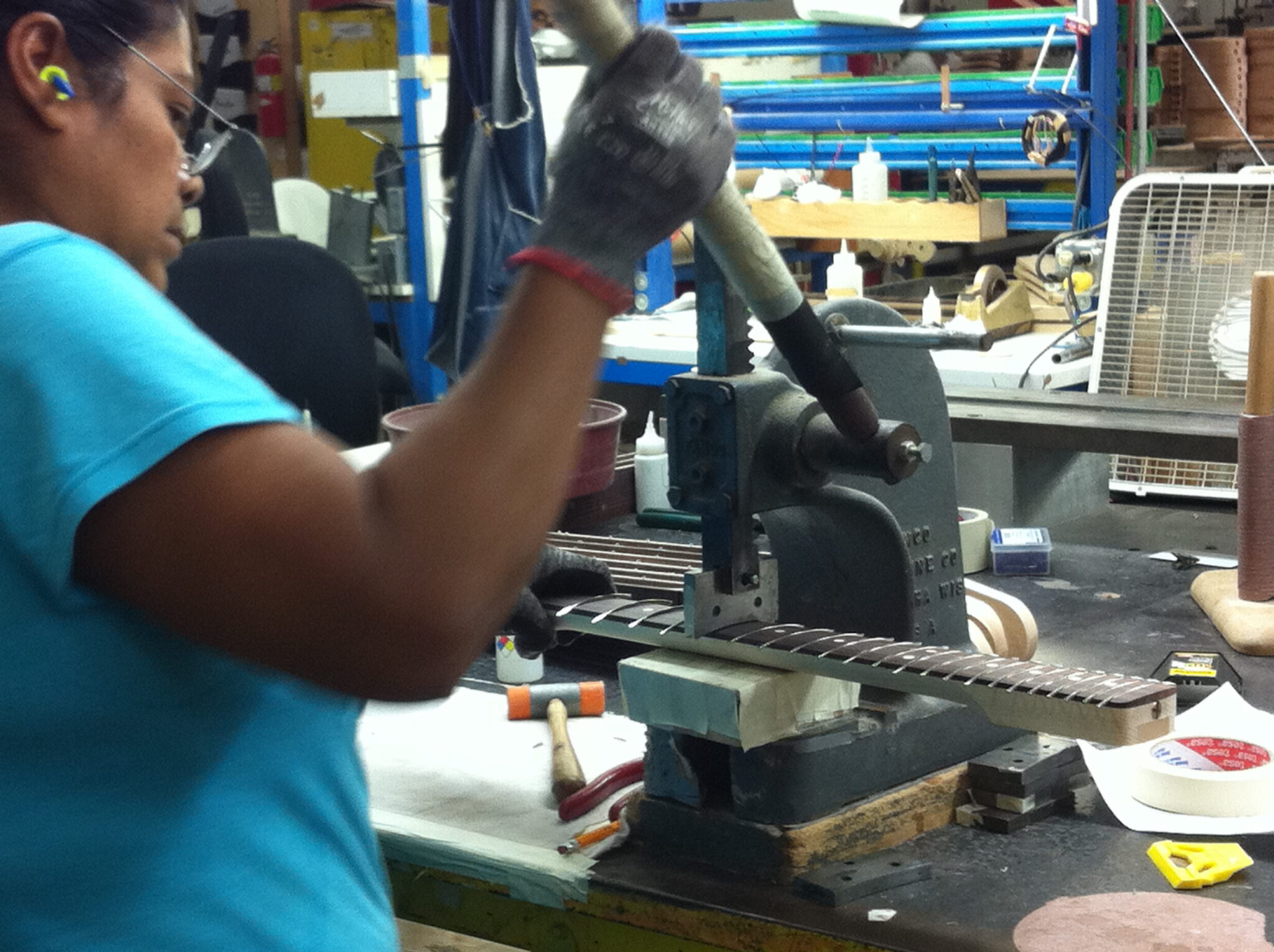
Once the necks are dimensioned and shaped, they visit the fretting department. Here it was interesting to note that the frets were installed via one of two different methods depending on the piece!

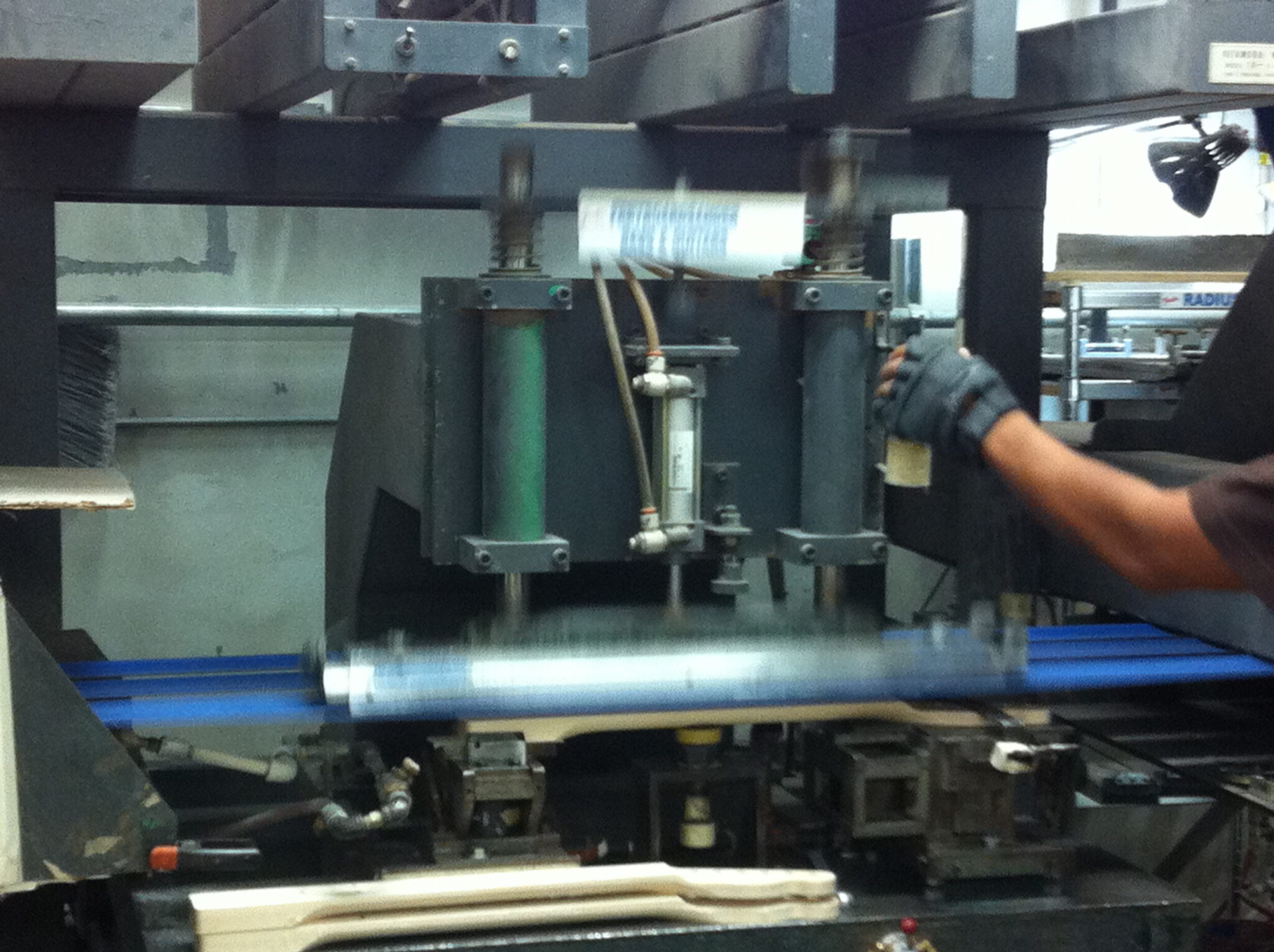
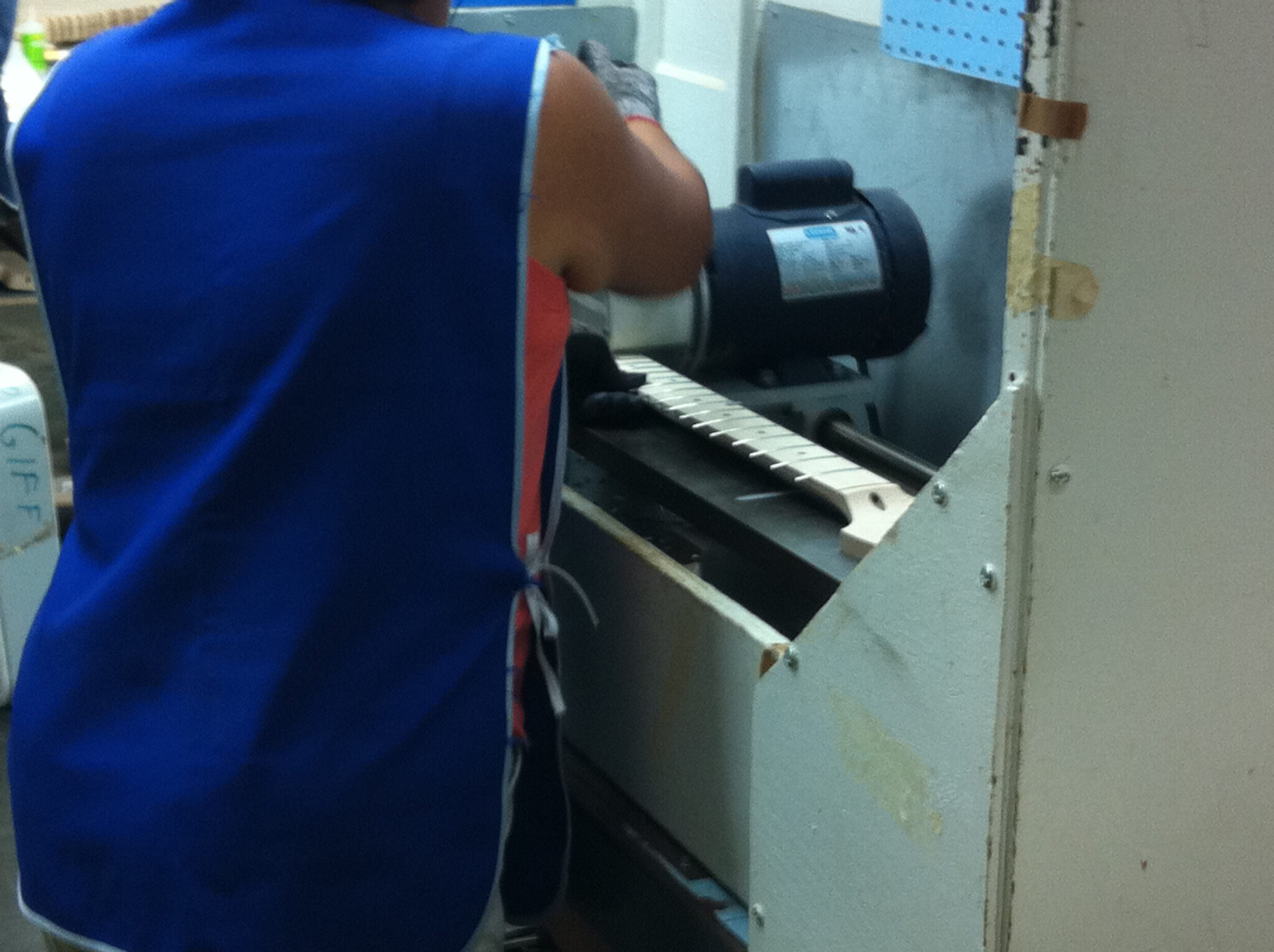
The bulk of necks are fretted with the use of a manually operated fret press; The fretted necks are then run past a high-speed cutter that removes the excess fret wire from the ends in two quick passes! A few feet away, bound bass necks were being fretted with a more time consuming hammer-in method!

Body Production and Finishing

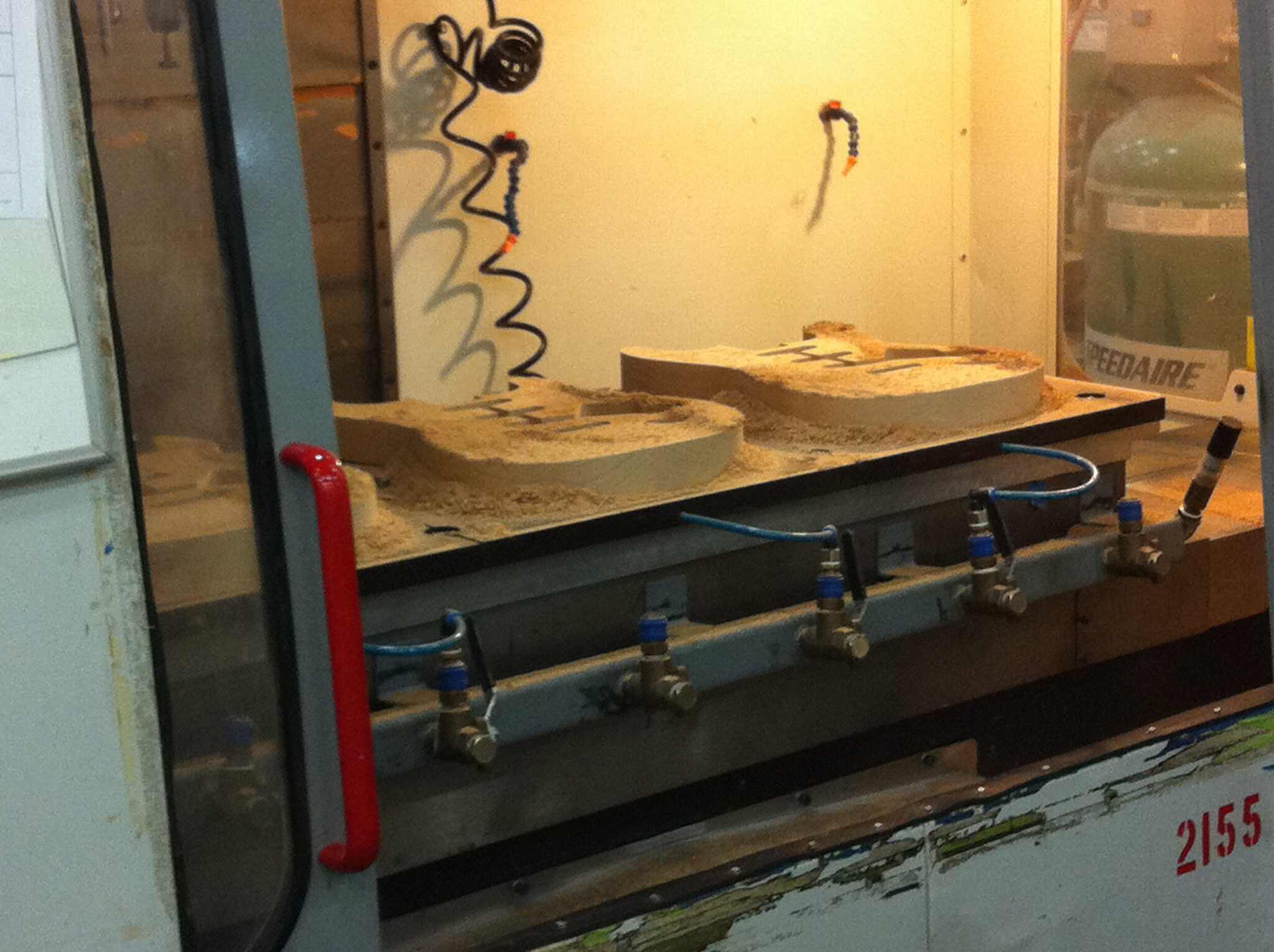
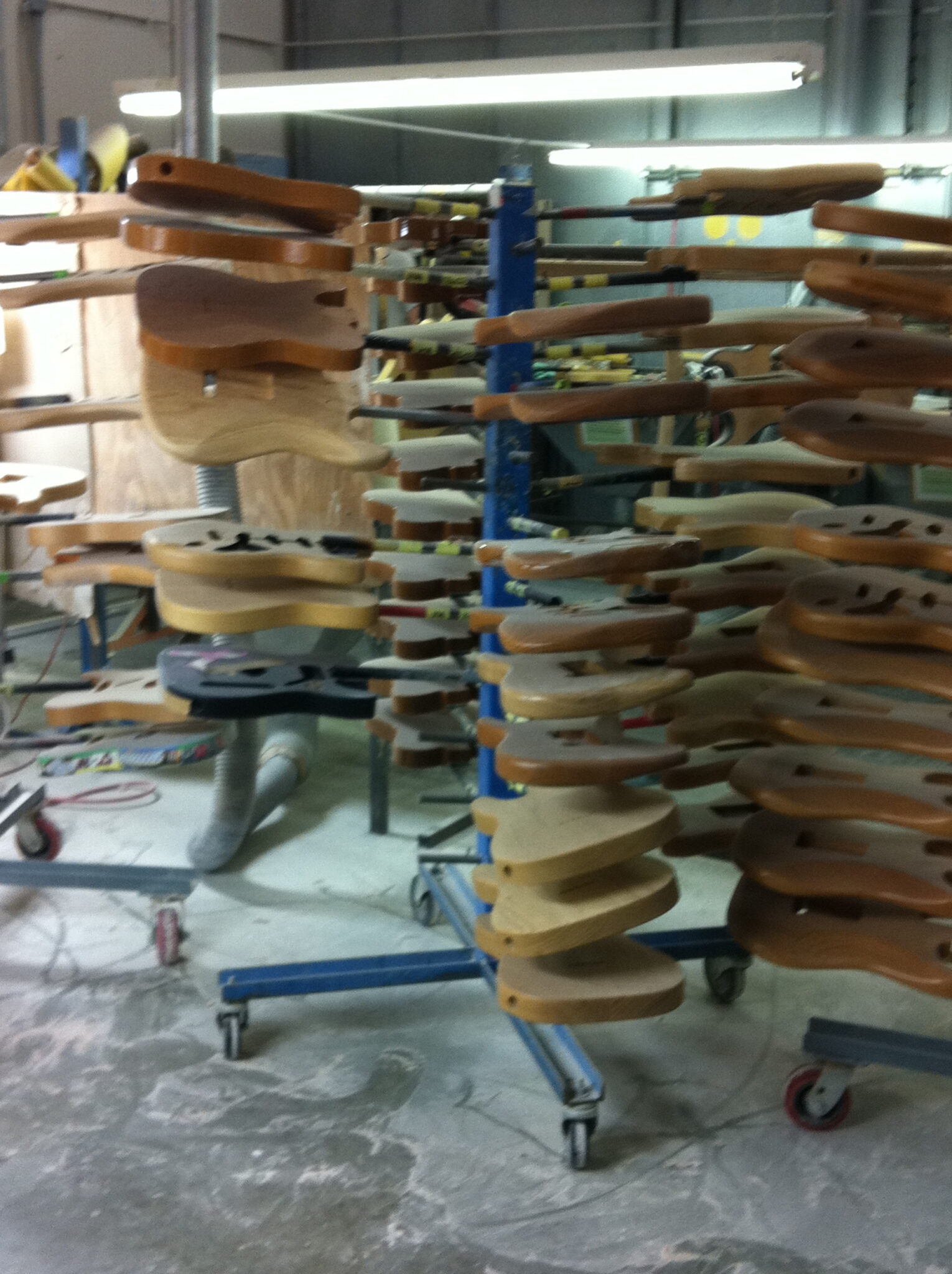
In another area of the factory, Fender employees craft the guitar bodies. It was amazing to watch as the computer controlled router cut out three Stratocaster bodies simultaneously in what couldn’t have been much longer than a minute!  

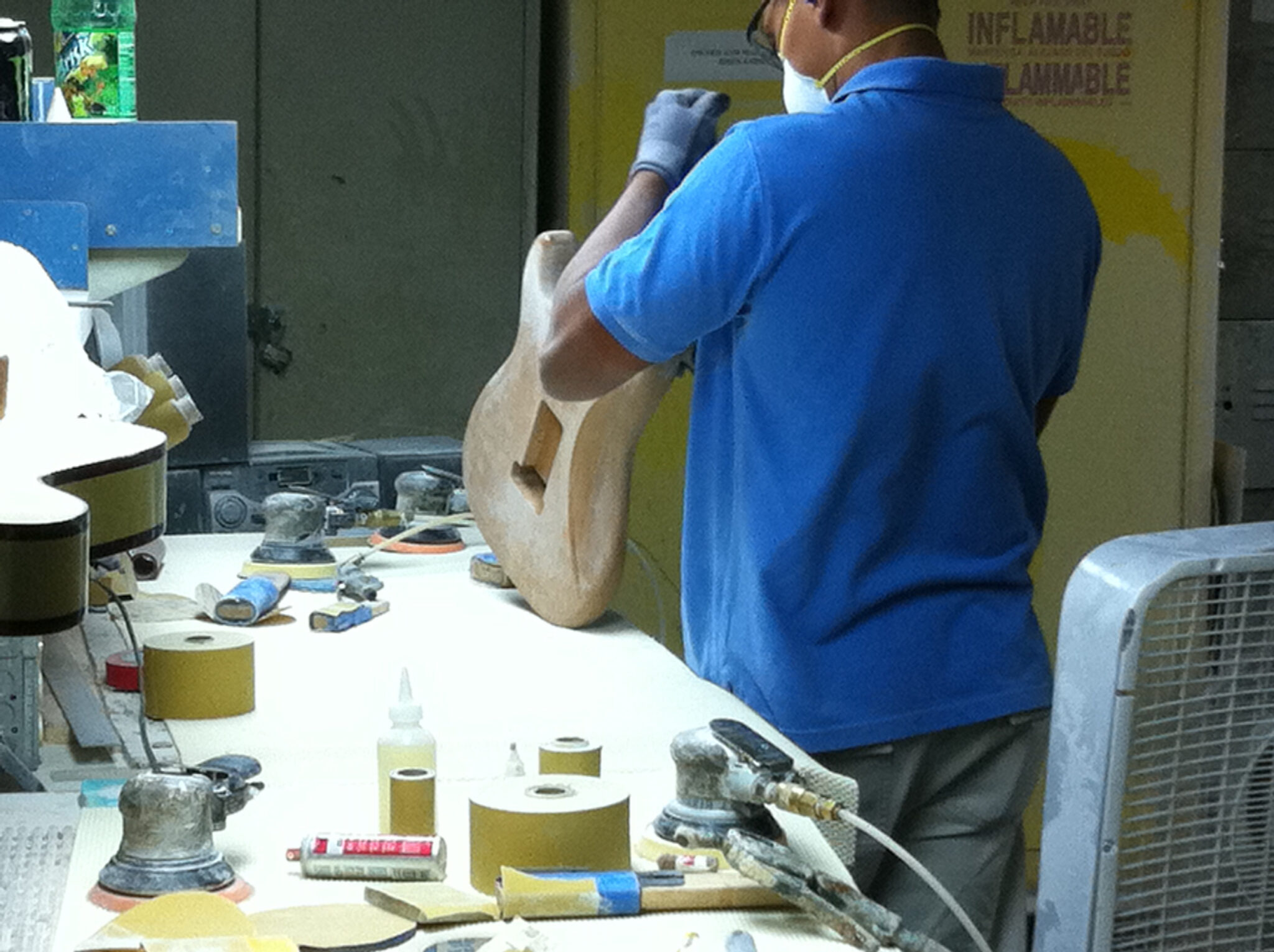
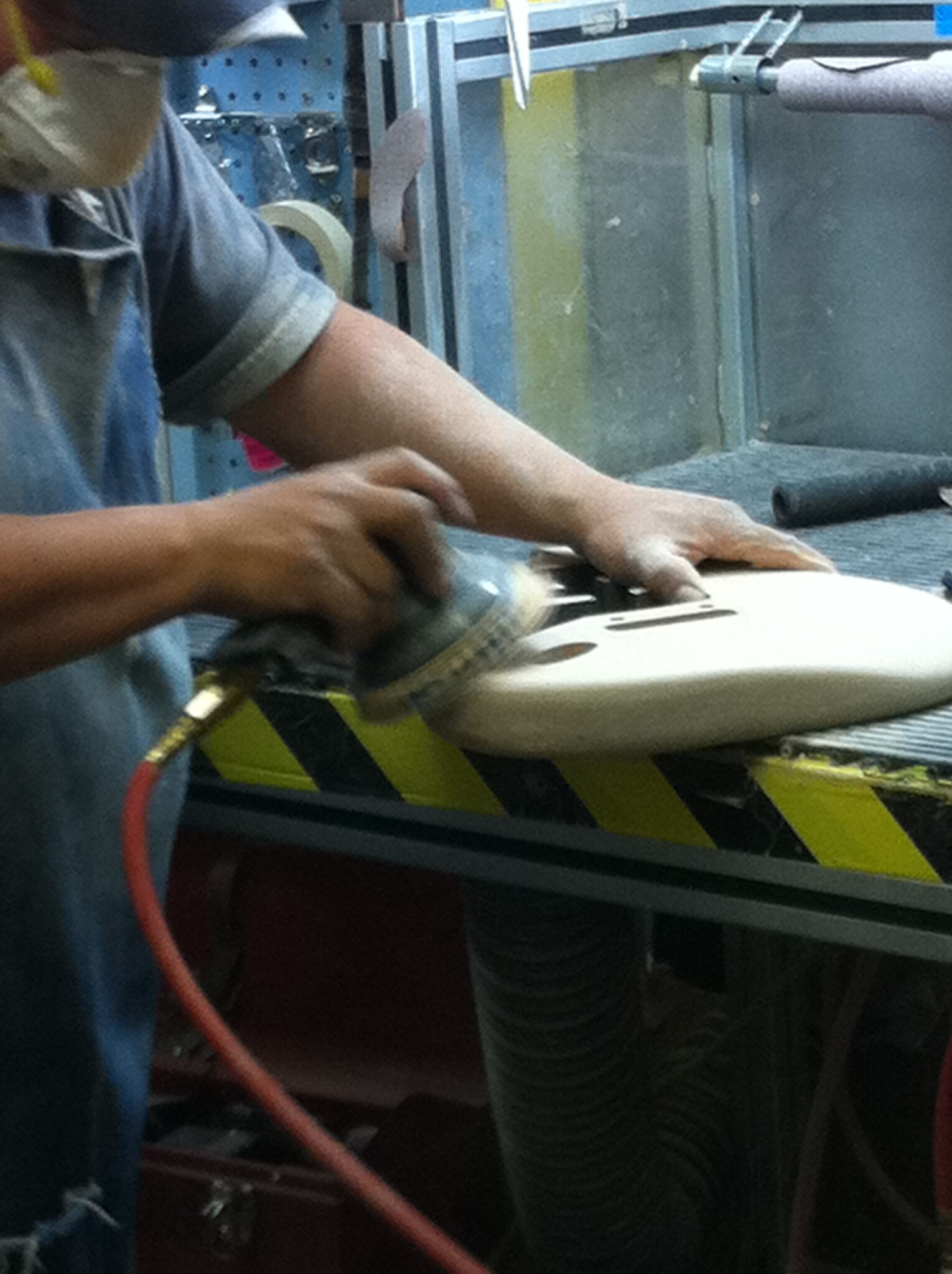
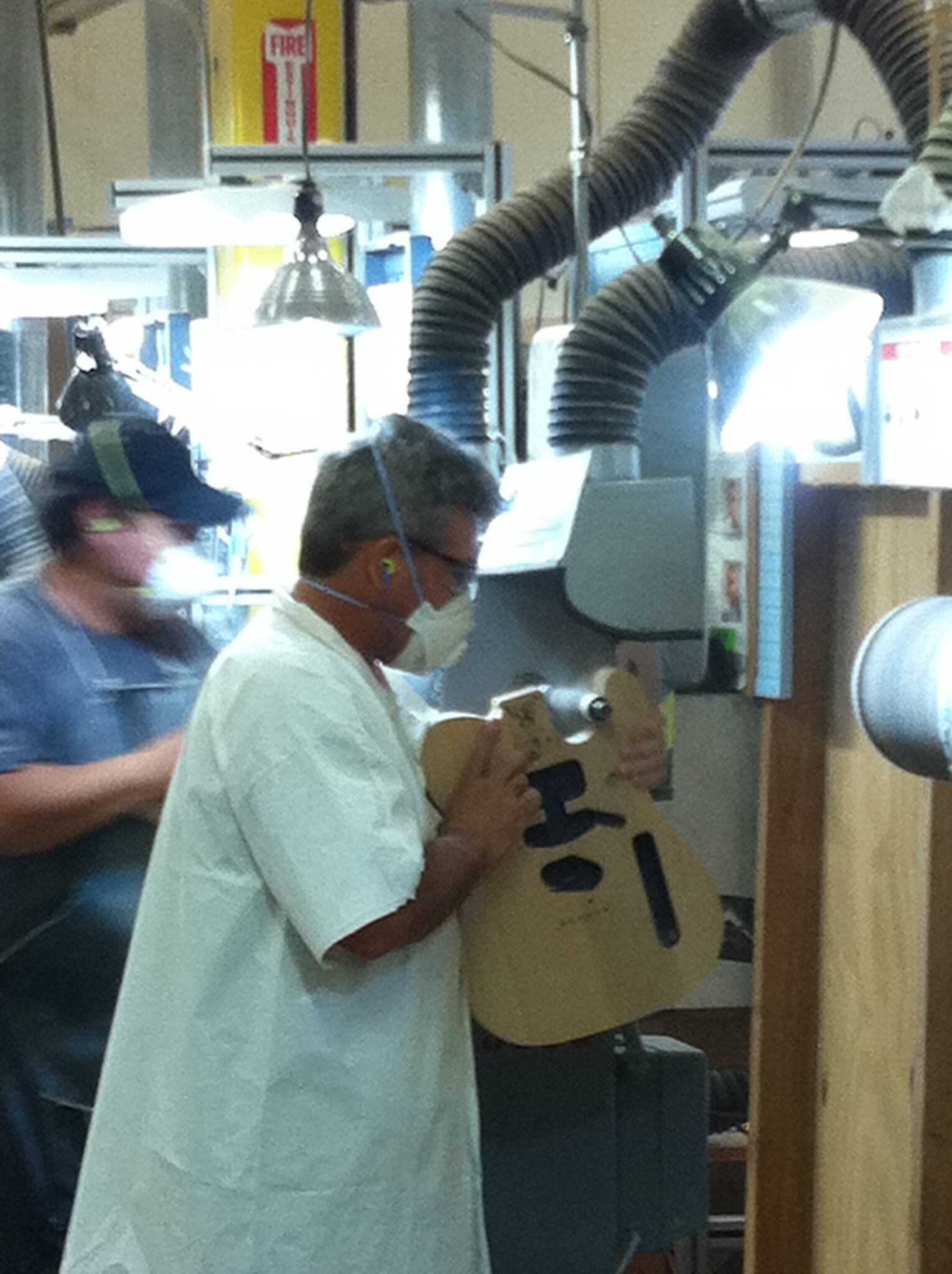
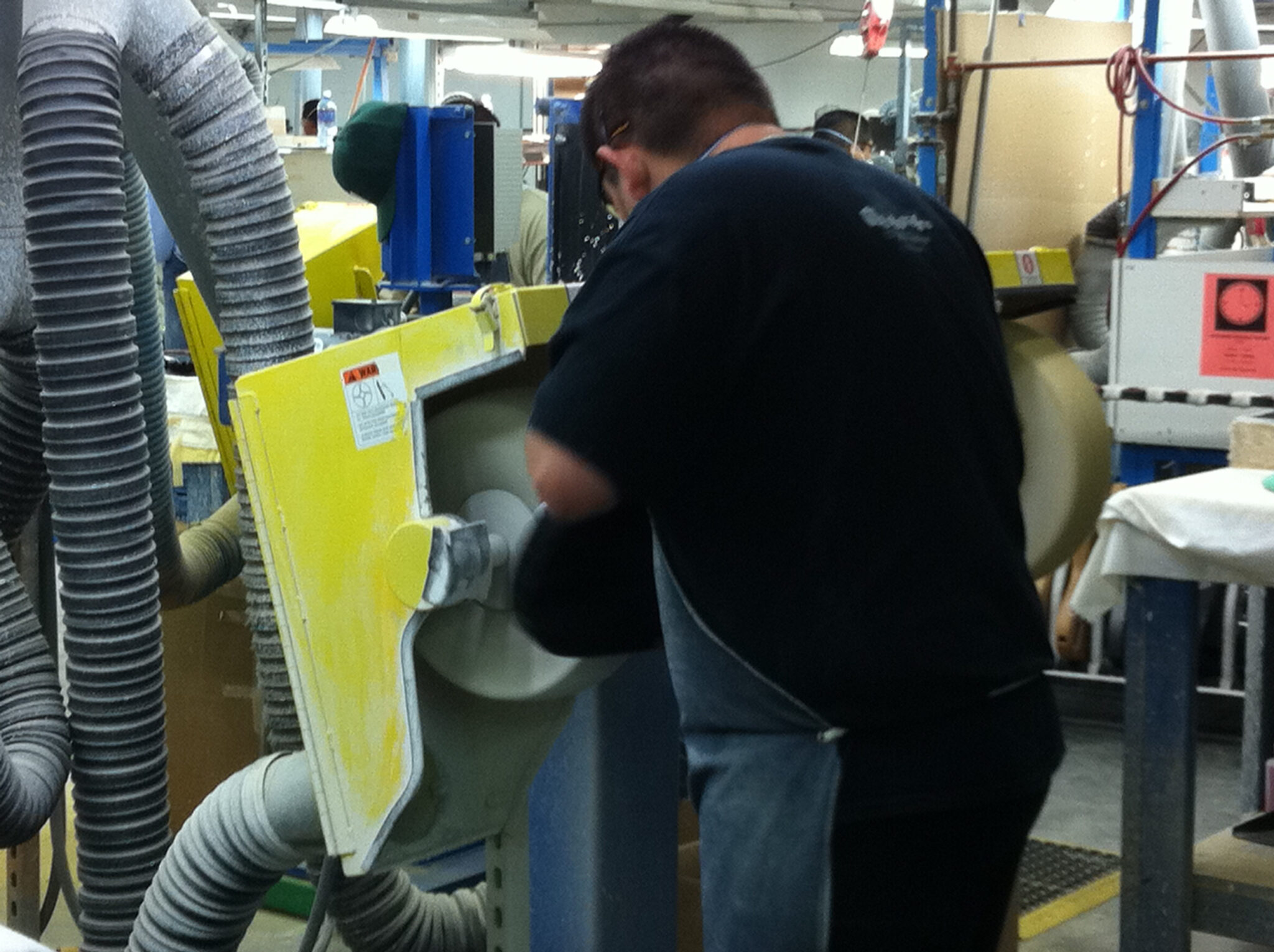
Once the bodies are cut, they head into the sanding area. Here, finer details are shaped and workers sand each guitar body to prepare it for finishing. 

The next step for the instruments is the finishing department. Unfortunately, due to the delicate nature of this work, Fender does not allow admittance to this area. Instead, visitors are shown a short video explaining the finishing process that guitars go through.  

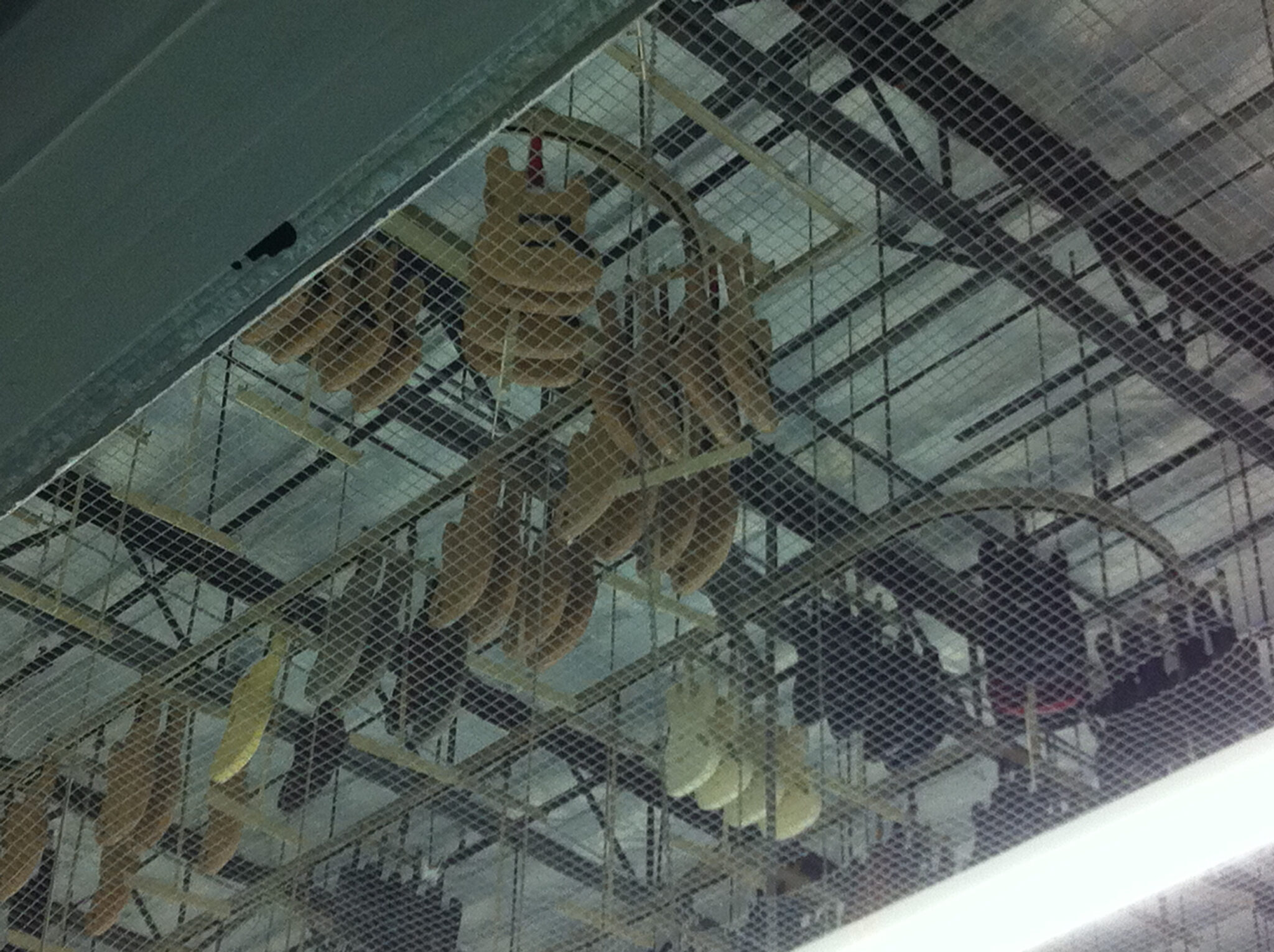
However, one interesting feature of Fender’s finishing procedure is visible throughout much of the factory. Fender has built a conveyor belt into the rafters of the facility where guitars can dry and cure after finishing!

Electronics and Final Assembly

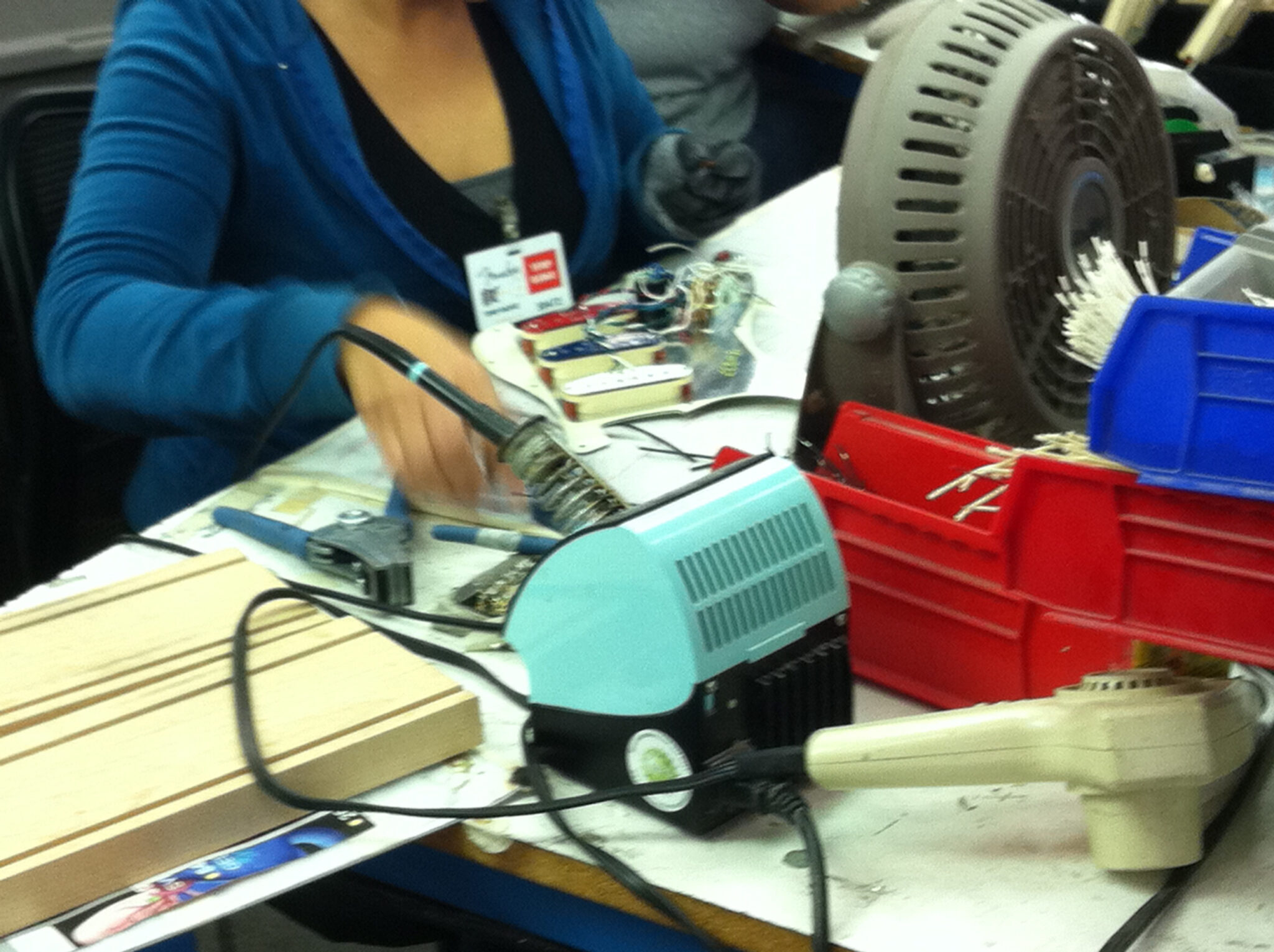
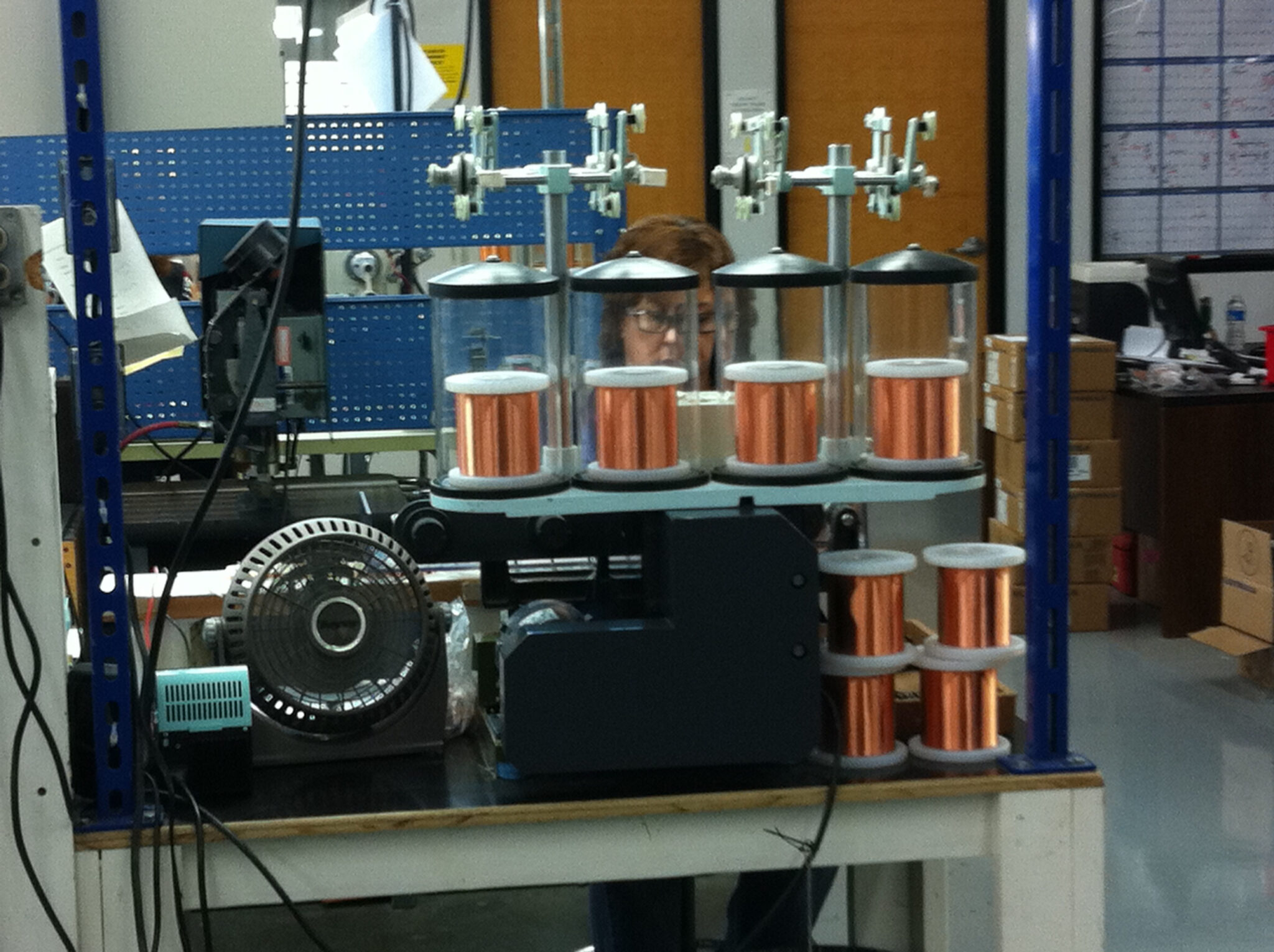
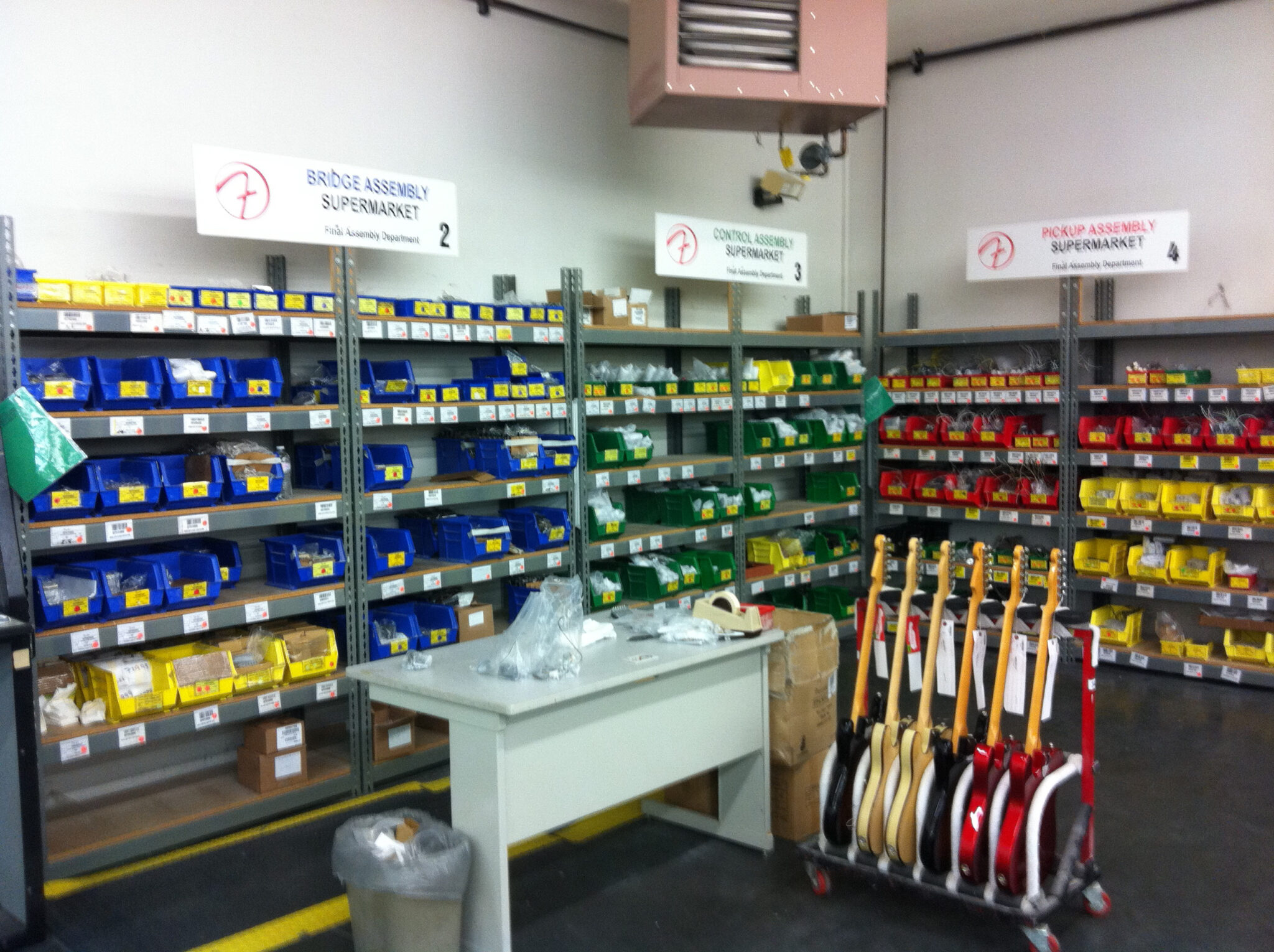
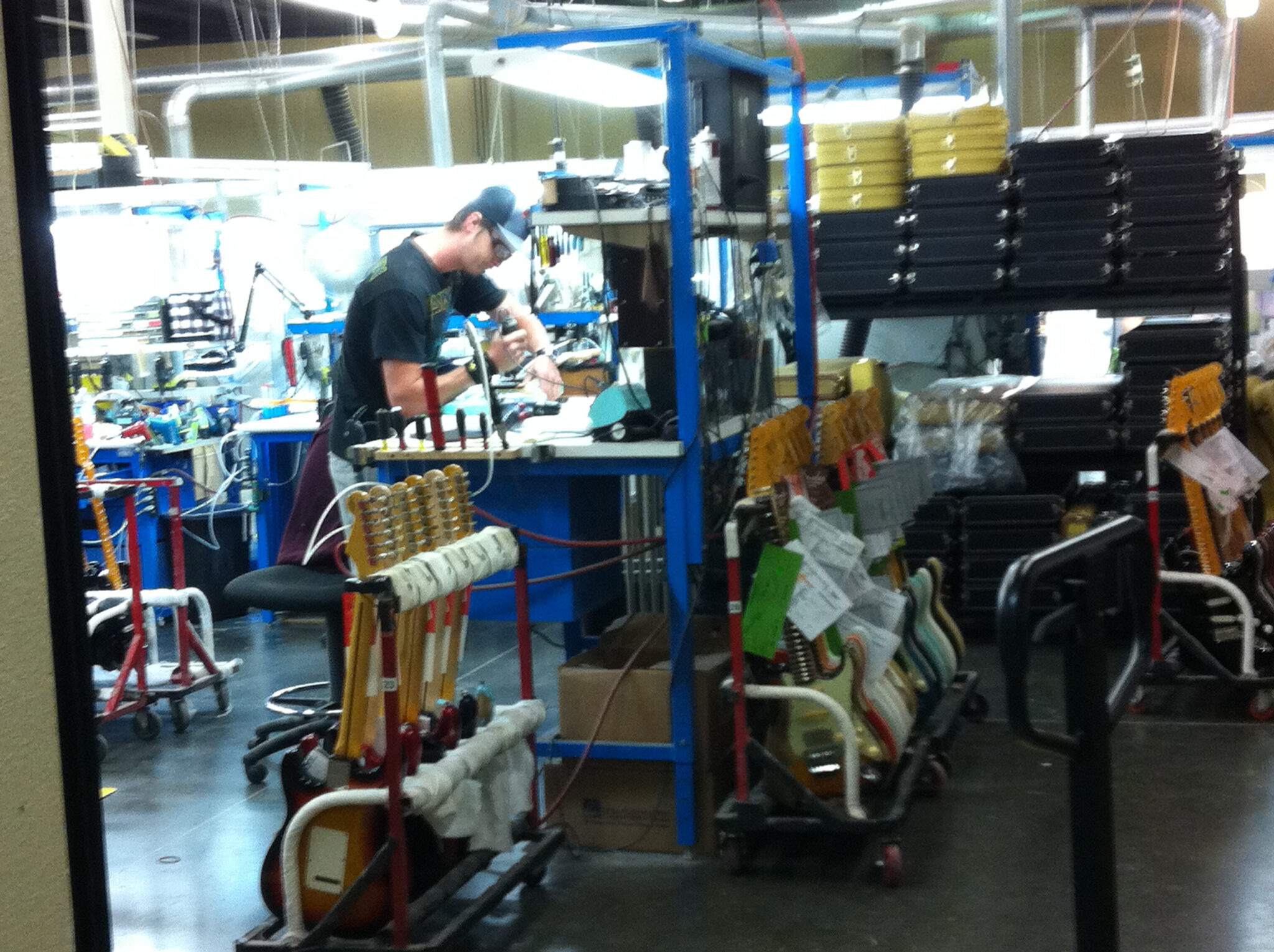
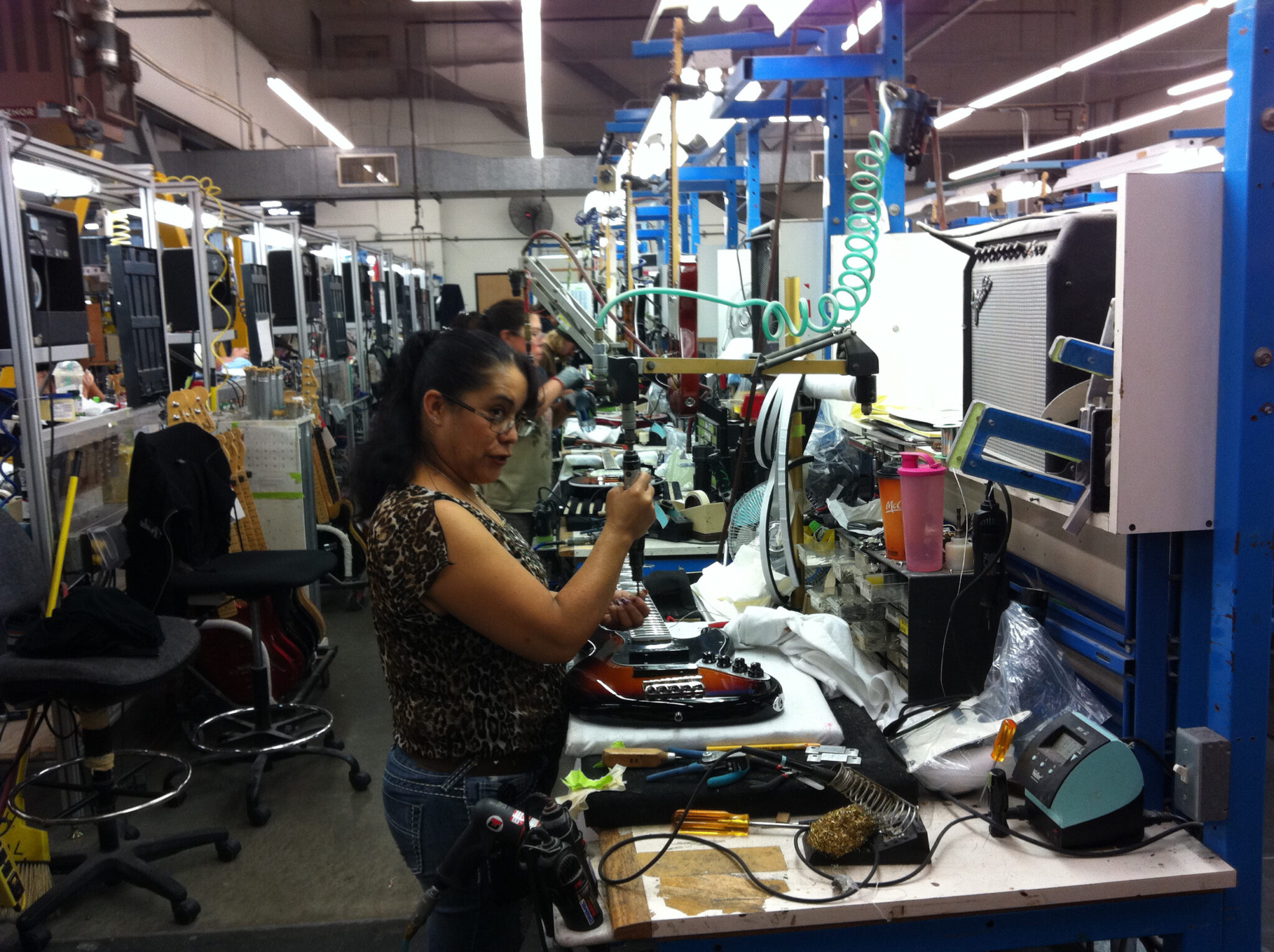
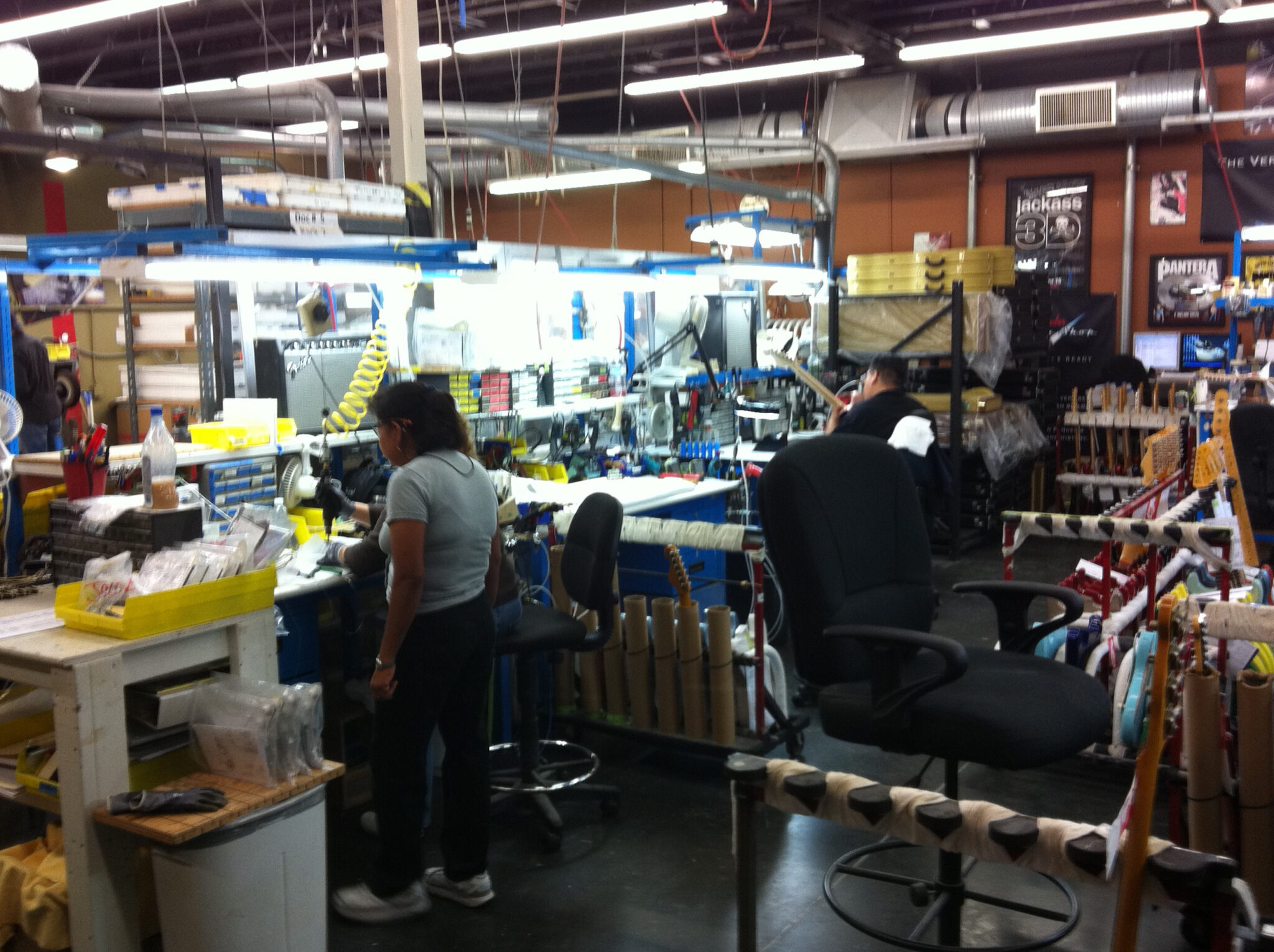
Next, the tour brought us past where Fender pickups are made and wound on premises,  then through two stages of assembly: Where the electronics are wired into the pickguard to create the wiring harness and finally to the assembly/setup area where the instruments are bolted together, strung, and prepared for shipping.

The Fender Custom Shop

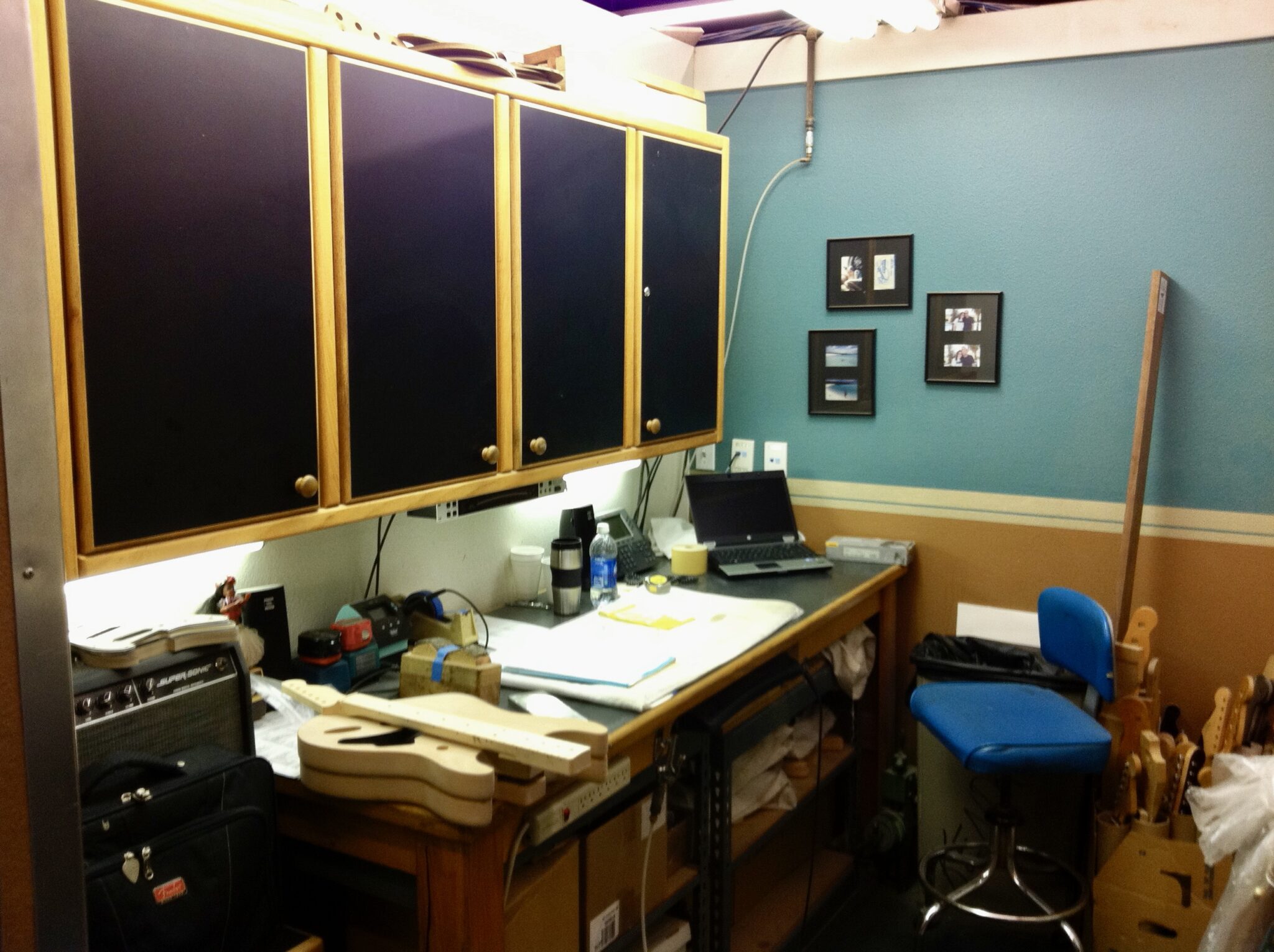
The last leg of the tour passes through the Fender Custom Shop, where a team of employees is equipped to handle any special request that a customer might have for their guitar. They do custom finishes, relic guitars, custom wiring and electronics, and even make replicas of famous guitars from the past.  

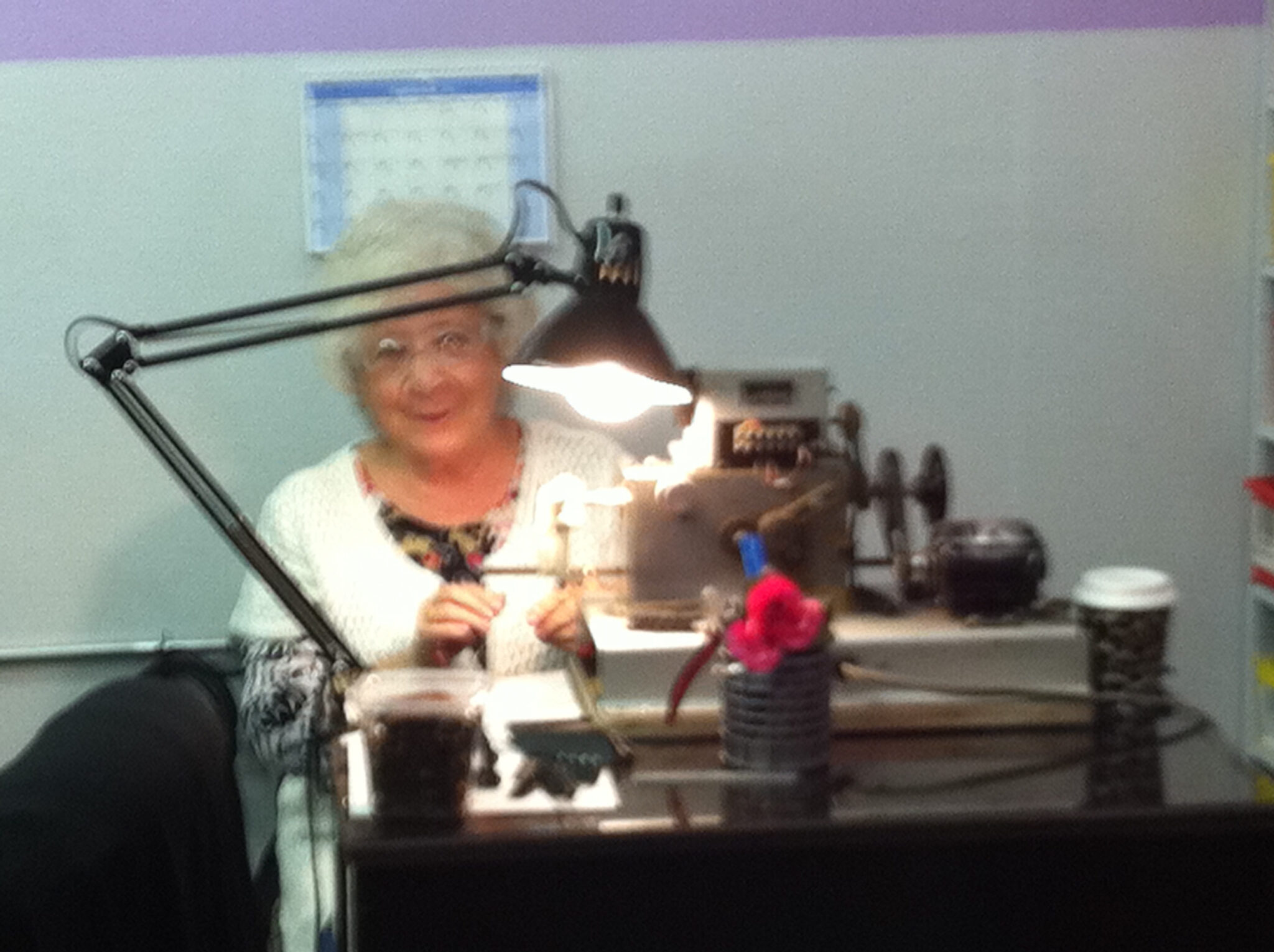
Within the custom shop is also the office of Abigail Ybarra, who has been winding pickups at Fender for decades. Her pickups fetch a hefty premium.

Closing Thoughts

The tour ended back at the Fender Visitor Center. Here guitar enthusiasts can peruse and play Fender guitars, as well as purchase merchandise such as tee shirts, coffee mugs, etc. The tour was a great experience and well worth the time for guitarists of all ages and ability levels, as well as their families. I hope to take the tour again the next time my travels bring me to southern California.

Picture of Erik Salomon, Founder & Principal Luthier
Erik Salomon, Founder & Principal Luthier

The Calico Journal is where we share thoughts, projects, discoveries and the occasional rabbit hole from the workshop, drawn from years of building, repairing and teaching. It isn't meant as a step-by-step guide to working on your own instrument, but we hope you find something useful here.

The Right Parts Make the Difference

Many of the parts mentioned in the Journal are available at GuitarRepairParts.com, your guitar's parts department.

About Calico Guitarworks

Calico Guitarworks is a small, hands-on instrument workshop built on decades of experience working with guitars. Founded by Erik Salomon, we design and build original instruments in Bethlehem, Pennsylvania, and keep our showroom and repair shop on Long Island. Built on craftsmanship, guided by experience, and grounded in exceptional service.

Learn more about Calico Guitarworks, see our instruments, read the FAQ, or get in touch.

Sign-up for our Mailing List

Subscribe

* indicates required